
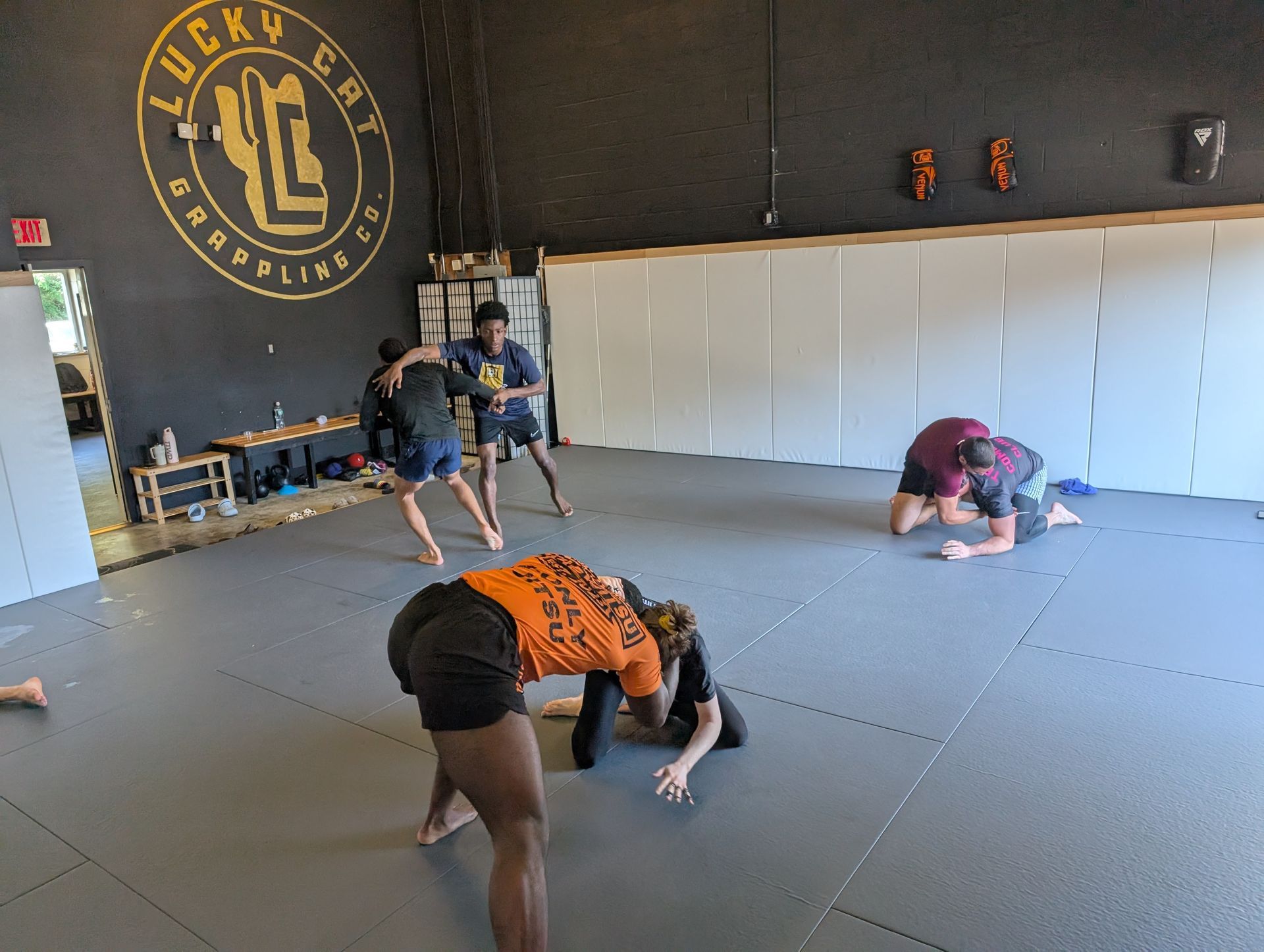
Build a real Jiu Jitsu gas tank by training the same stop and go rhythm you feel during rolls, not by zoning out on a machine.
If you train Jiu Jitsu consistently, you already know the moment cardio matters most: when your technique is still there, but your breathing gets loud and your timing starts slipping. Around here, we see it all the time. People are strong, technical, and motivated, but a few hard scrambles in a row can turn the last half of class into survival mode.
The good news is you do not need hours on a treadmill to fix that. In fact, the kind of long, steady running most people default to is often the least specific way to condition for grappling. Our goal is to help you build cardio that actually shows up in live rounds: repeated 20 to 40 second bursts, short recoveries, and the ability to calm your body down fast so you can think.
This article breaks down what matters, why it works, and how to fit it into a schedule that includes Brazilian Jiu Jitsu in Manalapan, NJ without turning your life into endless workouts.
Why Jiu Jitsu Cardio Feels Different Than Regular Cardio
Most sports let you settle into a pace. Jiu Jitsu rarely does. A typical round includes intense efforts that spike your heart rate, followed by brief chances to recover while you pummel, frame, or recompose guard. Over a six minute round, you repeat that wave again and again.
That means your conditioning needs two engines working together. Your aerobic system helps you recover between scrambles and keeps you from feeling “stuck” in a high heart rate all round. Your anaerobic system covers the explosive bursts: standing up, finishing a guard pass, fighting out of a bad pin, or hitting a takedown entry with real intent.
When people only train one side, the gap shows quickly. If you only do easy cardio, you might recover well but feel flat in explosive moments. If you only do all out intervals, you might feel powerful for a minute but struggle to regain control of your breathing between bursts. The sweet spot is a mix, and it is more efficient than most folks expect.
The Match Rhythm: Train the 40 and 20 Pattern
One of the simplest ways to improve conditioning for Jiu Jitsu is to mirror the effort pattern you experience while rolling. Many rounds include hard pushes of roughly 20 to 40 seconds, followed by 10 to 60 seconds where you are still working, but not at maximum intensity. Training that rhythm teaches your body to clear fatigue and re engage.
A practical template looks like this: 40 seconds hard, 20 seconds easy, repeated for six minutes. That is a full round. You can also build up to two or three “rounds” with a short rest between, the same way you would pace multiple rolls.
The biggest mistake we see is making every interval a death sprint and every rest a complete stop. In grappling, your “rest” is often active: you are framing, breathing, and making small adjustments under pressure. So we like recoveries that stay moving at an easy pace. It feels more realistic, and it carries over better.
HIIT That Actually Transfers to Jiu Jitsu
High intensity interval training works well for Jiu Jitsu because it matches the stop start nature of grappling. You can do it on a bike, rower, hill, or even with simple bodyweight work. The key is structure, not suffering.
Here are a few HIIT options we recommend when you want results without long treadmill sessions:
• Assault bike or stationary bike intervals: 30 to 40 seconds very hard, then 10 to 20 seconds easy spin, repeated for 6 to 12 minutes; this is low impact and lets you push intensity without wrecking your joints
• Rowing intervals: 30 seconds on, 30 seconds off for 15 to 20 rounds at about 60 to 70 percent effort; rowing builds full body endurance and rewards good breathing patterns
• Tabata finishers: 20 seconds all out, 10 seconds rest for 8 rounds; it is short, sharp, and best used when you are already warmed up
• Hill sprints: 10 to 15 seconds up, walk down and recover for 45 to 60 seconds; hills reduce the pounding you get from flat sprints and build power endurance
• Kettlebell swings or burpee intervals: 20 to 30 seconds hard, 30 to 40 seconds easy, repeated for 10 to 15 minutes; this is a solid option when the weather is ugly and you want something simple indoors
If you want a simple rule, keep one HIIT session per week when you are also doing multiple Jiu Jitsu classes. Two can work, but only if your sleep, nutrition, and recovery are handled. Otherwise, you start collecting fatigue and your rolls get worse, which defeats the point.
Zone 2: The Missing Piece for People Who Gas Early
Zone 2 is steady cardio at a pace where you can breathe through your nose or talk in short sentences. It usually sits around 60 to 70 percent of your max heart rate. It is not glamorous. It also works.
This is where many Jiu Jitsu athletes get the biggest bang for their time, especially beginners and busy adults. A stronger aerobic base helps you recover between rounds, clear lactic acid more efficiently, and keep your heart rate from staying pinned the whole class. It also supports longevity. You can train hard for years if your base is solid.
For most people, 20 to 45 minutes once per week is enough to notice a difference. If you love it, you can do two sessions. If you hate it, keep it short and consistent. Cycling, incline walking, swimming, and easy jogging all work. The best choice is the one you will actually do when life gets busy in Manalapan, NJ.
How Much Cardio Do You Need If You Already Train?
We like conditioning that supports your training, not conditioning that competes with it. If your week already includes 2 to 3 Jiu Jitsu classes plus some strength work, you do not need a marathon plan. You need targeted sessions that fill the gaps.
A simple weekly template that works for many students looks like this:
1. One HIIT session focused on short bursts and controlled recoveries
2. One Zone 2 session to build the base and improve between round recovery
3. Your regular Jiu Jitsu classes, where you apply technique under pressure
4. One to two strength sessions if your schedule allows, emphasizing posterior chain, grip endurance, and trunk stability
This approach keeps your total conditioning time manageable while still training both energy systems that matter in grappling.
An 8 Week Cardio Plan You Can Actually Stick To
Progression matters. When people jump straight into advanced intervals, the first week feels heroic, and week three feels terrible. We would rather start slightly easier and build momentum. Here is a simple eight week progression we use often.
Weeks 1 and 2:
Do one Zone 2 session for 20 to 30 minutes and one short interval session of 6 minutes total work, using 30 seconds hard and 30 seconds easy.
Weeks 3 and 4:
Increase Zone 2 to 30 to 40 minutes. For intervals, switch to 40 seconds hard and 20 seconds easy for 6 minutes. If you feel good, add a second 6 minute round after a 2 minute recovery.
Weeks 5 and 6:
Keep Zone 2 steady. Add one VO2 style session: 4 minutes hard at 85 to 90 percent effort, then 4 minutes easy, repeated 4 times. It is tough, so place it away from your hardest rolling day.
Weeks 7 and 8:
Choose one interval style and get sharper rather than longer. Keep total hard work similar, but focus on smoother breathing, cleaner pacing, and fast recovery. If you want a test, see if you can finish a full 6 minute interval round and feel ready to go again after 60 to 90 seconds.
The goal is not to turn you into a runner. The goal is to make your Jiu Jitsu feel calmer, even when the pace gets spicy.
Conditioning That Helps Your Technique, Not Just Your Lungs
Cardio for grappling is not only about heart rate. It is also about efficiency. A student who squeezes every grip, holds every isometric position too long, and tries to bench press opponents will always feel more tired than someone who uses frames, angles, and timing.
So we coach conditioning alongside smarter movement habits:
Breathe on purpose: exhale during effort, inhale during control, and avoid holding your breath in scrambles.
Relax your hands when you can: death gripping burns your forearms and spikes your heart rate.
Use positions to recover: half guard frames, closed guard clamps, and tight top pressure can be active rest if you stay technical.
Do less, better: one clean guard recovery beats three frantic bridges.
When your efficiency improves, your cardio improves almost automatically because you stop spending energy on panic movements that do not move the fight forward.
Winter Friendly Cardio Ideas for Manalapan, NJ
Local weather matters. In New Jersey winters, outdoor runs can be inconsistent, and long treadmill sessions get boring fast. We prefer options you can repeat year round without beating up your knees.
Indoor bike intervals, rowing, jump rope, and simple circuits are easy to slot in before work or after class. If you enjoy outdoor work, hill sprints on a safe grade can be a strong choice when conditions are good. The main point is consistency. A plan you can repeat weekly will always beat an ambitious plan you abandon when the calendar gets messy.
Take the Next Step
If you want better cardio for Jiu Jitsu, you do not need to live on a treadmill. You need a mix of short intervals that match the pace of rolling, plus enough Zone 2 work to recover fast and stay composed. Add in better breathing and more efficient movement, and your rounds start feeling longer in a good way.
We build these ideas into how we coach at Lucky Cat Grappling Co., especially for students training Brazilian Jiu Jitsu in Manalapan, NJ who want to roll hard without burning out. If you want help turning this into a realistic weekly plan around your schedule, we are ready to guide you.
Train with purpose and see real improvement by joining a Jiu-Jitsu class at Lucky Cat Grappling Co.