
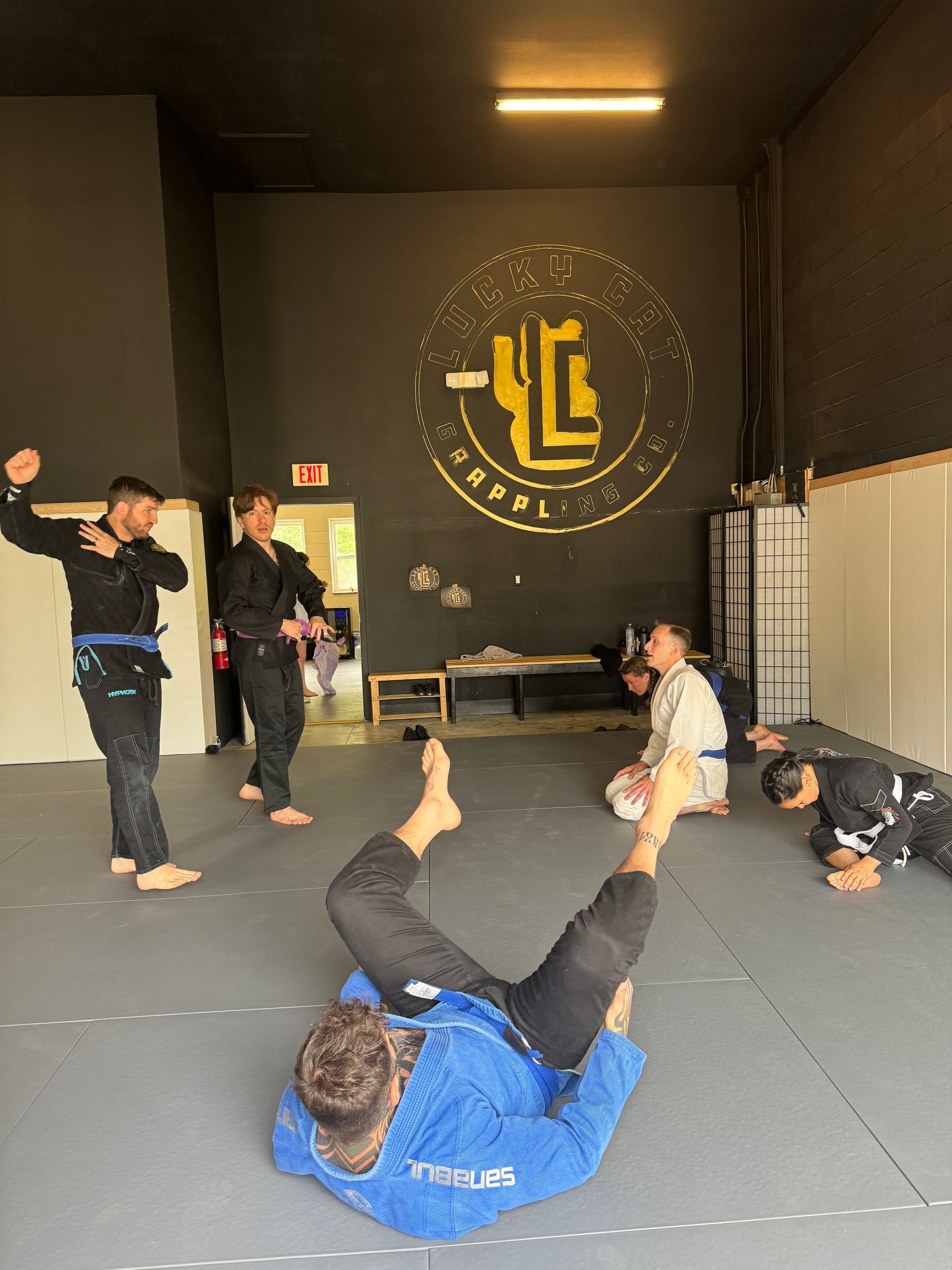
A consistent 20 minutes at home can turn into smoother escapes, sharper movement, and more confident rounds on the mats.
If you train Jiu Jitsu, you already know the frustrating part: you can understand a technique in class and still struggle to hit it cleanly when things speed up. That gap usually is not about effort. It is about repetition, body awareness, and being able to move well under pressure.
We built our teaching around the idea that progress comes from showing up consistently, even when life gets busy in Manalapan. Home solo drills give you something simple and practical: extra reps without needing a partner, a big space, or a full home gym. Think of it as bonus mat time that keeps your movement sharp between classes.
In this guide, we will walk you through solo drills you can do safely at home, how to structure a short routine, and how to connect these reps back to what you practice in our Brazilian Jiu Jitsu in Manalapan, NJ classes.
What Solo Drills Actually Do for Your Jiu Jitsu
Solo training will not replace live training. You will not develop timing, reaction speed, or the feel of weight and pressure without another person. But solo work is still a powerful accelerator, because it improves the parts that make techniques work in the first place.
When you drill alone, you are primarily building:
- Movement mechanics like hip rotation, framing posture, and safe ways to change levels
- Mobility in the hips, spine, and shoulders to make positions less “tight” and more efficient
- Coordination and balance so transitions stop feeling clunky
- Conditioning that matches grappling movement patterns
- Visualization skills that help you make faster decisions in class
We also like solo drills because they are low friction. If you only have an 8x8 foot area in your living room, you can still get meaningful practice in. Carpet is fine. A yoga mat is fine. If you have grappling mats, great, but you do not need them to start.
Your At Home Setup in Manalapan: Space, Safety, and a Simple Warm Up
Before we get into the drills, set yourself up to win. At home, most injuries happen from rushing, slipping, or trying to “send it” in a tight space.
Aim for:
- 8x8 feet of clear space with nothing sharp nearby
- Bare feet with good traction on carpet or a mat
- A pace where you can stay in control, especially for rolls
Start with a quick warm up that prepares the joints you use most in Jiu Jitsu. Five minutes is enough if you are consistent. We suggest easy neck rotations, shoulder circles, hip circles, cat-cow, and a few deep squat holds while breathing slowly through your nose. The goal is to feel warm and mobile, not exhausted.
Fundamental Solo Jiu Jitsu Drills That Pay Off Fast
These are the drills we consider high return because they show up everywhere: escapes, guard retention, scrambles, and top pressure. If you are newer, do these first. If you are experienced, you still do these, just cleaner and with more intent.
Hip Escape Shrimping
Shrimping teaches you how to move your hips away from pressure and rebuild guard. It is the backbone of escaping side control, recovering half guard, and creating space when you are pinned.
How to do it:
Lie on your back, one foot planted, push into the floor and slide your hips away while turning slightly onto your side. Bring your knee back in as if you are inserting a frame or recovering guard. Then repeat down the line.
Focus points:
Keep your shoulders relaxed, drive from your foot, and move your hips first. Do not just wiggle your upper body.
Reverse Shrimp and Hip Heist
Reverse shrimping helps when you need to pull your hips back under you, like recovering inside position or making space for guard work. Hip heists build the “get your hips out” movement you see in sit ups, guard retention, and technical stand up patterns.
Work both directions and keep your hands active, as if you are framing on an opponent.
Technical Stand Up
This is self-defense meets sport movement, and it shows up constantly. You will use it when you disengage from scrambles, when you need to stand from seated guard, and when you want to protect your base.
Do it slowly:
Post one hand behind you, same side foot planted, opposite leg extended as a shield, lift your hips, bring the extended leg back, then stand while keeping your other hand up like it is checking distance.
Breakfalls and Side Falls
We want you training for the long run. Learning to fall well reduces risk when you get taken down, tripped, or even just bumped during a scramble.
Start with seated breakfalls. Then progress to squatting breakfalls if you have the space and control. Keep your chin tucked and slap the mat or carpet with your arm at an angle, not straight out.
Forward Roll and Backward Roll
Rolling builds confidence with inversion and momentum, which matters for scrambles and transitions. Keep the roll smooth and quiet. If it feels loud and jarring, slow down and tighten the pathway.
If your neck or back does not like rolling yet, skip it for now and focus on shrimping, stand ups, and crawling patterns. No drill is worth forcing.
Granby Roll Progression
Granby rolls build the shoulder and hip movement used in guard retention and inversion. Start with a gentle shoulder roll motion and only increase speed when your body feels stable.
The big rule: do not crank your neck. Your shoulder and upper back should carry the rotation.
Shadow Grappling: The Missing Link in Home Training
Shadow grappling is exactly what it sounds like: you flow through movements as if an opponent is there. We like it because it connects isolated drills into something that feels more like actual Jiu Jitsu.
Pick three techniques or transitions and loop them for five to ten minutes at a steady pace. For example:
- Hip escape to recover guard
- Technical stand up to get back to your feet
- Sprawl motion to simulate defending a shot, then reset
Visualization matters here. Picture where your frames go. Picture the space you are trying to create. If you are consistent, your body starts choosing cleaner angles in live rounds because the pathways are familiar.
Conditioning Drills That Feel Like Grappling (Without Turning It Into a CrossFit Day)
Conditioning should support your training, not bury you. We prefer simple, grappling-specific patterns that build stamina at a controllable intensity. A solid target is 20 to 30 minutes total session time, where you can keep your heart rate up but still move well.
Here are a few favorites:
- Bear crawls forward and backward to build shoulder endurance and core stability
- Sit-throughs to train hip rotation and scrambling movement
- Sprawls with a controlled return to stance for sport-specific conditioning
- Bridges and shoulder walks to reinforce escaping mechanics and pressure tolerance
If you have a light resistance band, you can also add shoulder and hip mobility work that helps with injury prevention. Bands are not required, but they are useful for joint-friendly strength.
A Simple 25 Minute At Home Solo Routine We Recommend
If you want a plan you can repeat without overthinking, use this. Keep a notebook nearby and track what you did. Progress is easier to feel when you can see it.
1. Warm up and mobility for 5 minutes: hips, spine, shoulders, deep breathing
2. Fundamentals for 10 minutes: shrimping, reverse shrimp, technical stand up, 10 reps per side
3. Movement skills for 5 minutes: forward roll or granby progression at a controlled pace
4. Conditioning for 4 minutes: two rounds of 30 seconds bear crawl, 30 seconds sit-throughs, 60 seconds rest
5. Cool down for 1 minute: long exhales, gentle hip stretch, relax your shoulders
This routine is intentionally simple. You can do it three to five days per week and still have energy to train hard in class. If you only manage two days some weeks, that still counts. Consistency beats intensity most of the time.
How Often You Should Do Solo Drills and What They Cannot Replace
For most people, the sweet spot is 20 to 30 minutes per session, several times per week. Daily can work if you keep the intensity moderate and prioritize mobility.
Solo work helps you:
- Move more efficiently under pressure
- Build muscle memory for escapes and guard recovery
- Warm up faster and feel less stiff when you hit the mats
- Reduce injury risk by improving fall mechanics and joint control
Solo work does not fully develop:
- Timing against a resisting opponent
- Sensitivity to weight shifts and pressure
- The decision-making that happens during live rounds
That is why we treat home drills as a supplement to classes. When you combine both, your Jiu Jitsu improves faster because you get better movement plus real feedback.
Common Questions We Hear From Students in Manalapan
Do I need mats or special equipment?
No. A clear space on carpet works. If you have a yoga mat, it helps with comfort. If you have grappling mats, even better. Bands are optional.
Are these drills beginner-friendly?
Yes. Beginners should start with shrimping, technical stand ups, and breakfalls. Those movements show up constantly and they build a foundation for everything else.
How do I know I am improving?
Track reps, but also track quality. Are you smoother? Less noisy? More balanced? In class, you will notice you can create space more reliably and recover guard with fewer “panic” movements.
What if I feel sore or tight?
That is normal at first, especially in the hips and shoulders. Keep the intensity manageable and spend extra time on mobility. If something feels sharp or unstable, stop and adjust.
Take the Next Step
If you want faster progress, the best path is simple: drill smart at home, then pressure-test in class. That is exactly how we structure training at Lucky Cat Grappling Co. because it keeps your learning practical, steady, and realistic for a busy schedule in Manalapan.
When you bring consistent solo Jiu Jitsu reps into our sessions, you show up warmer, sharper, and more confident in the positions we train. Over time, those small home sessions add up to cleaner escapes, better guard retention, and a lot more control when rounds get scrappy.
Take what you learned here to the mat by joining a Jiu-Jitsu class at Lucky Cat Grappling Co.