
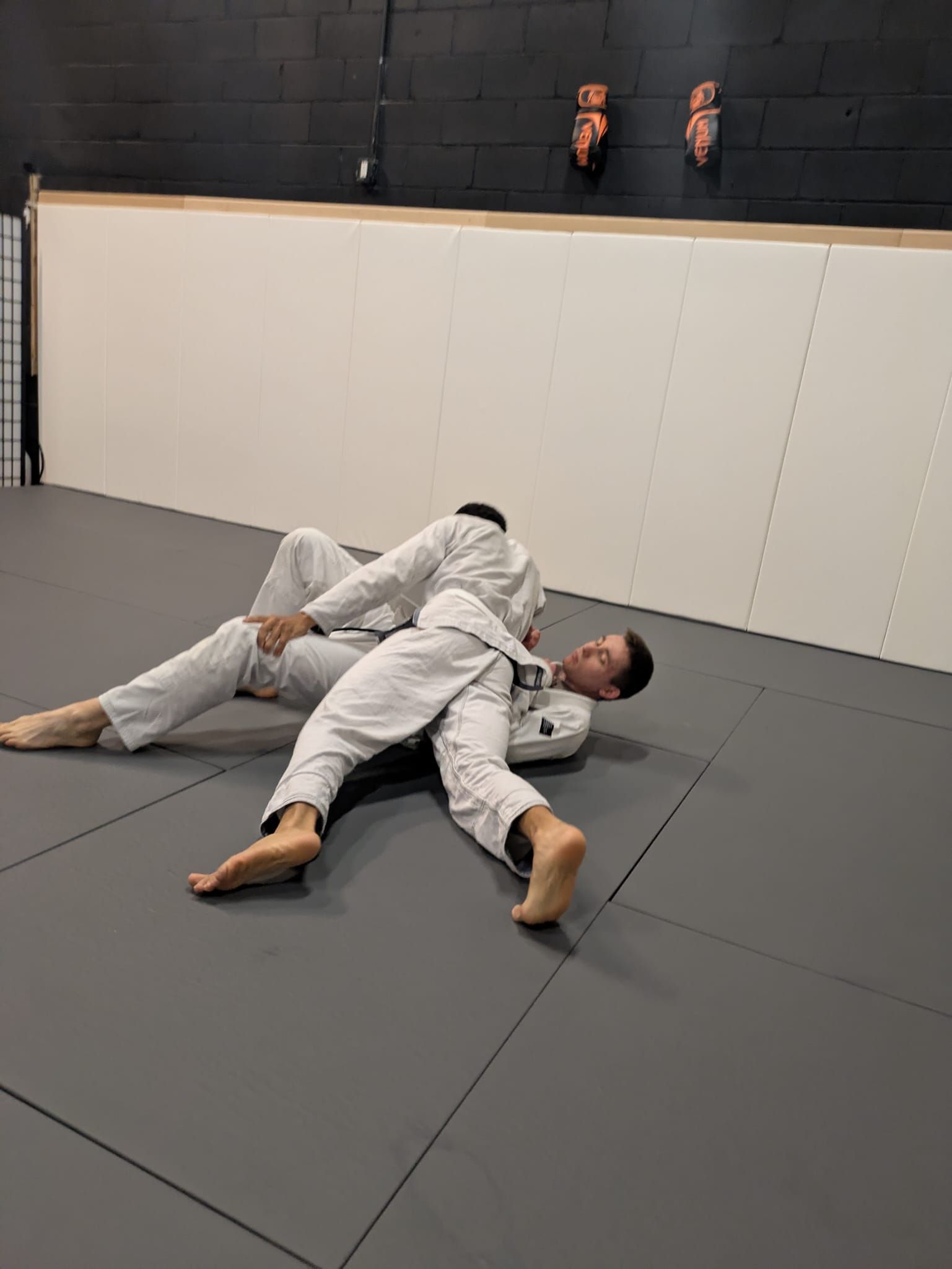
Jiu Jitsu is one of the few workouts that trains your body, your decision-making, and your confidence at the same time.
If you have been curious about Jiu Jitsu, you are in good company, and not just in Manalapan. Brazilian Jiu-Jitsu has grown to millions of practitioners worldwide, with roughly 500,000 to 750,000 people training in the US, and interest has roughly doubled over the past decade. We see that same momentum locally, especially among busy professionals and families who want something more skill-based than another treadmill routine.
Starting, though, can feel like a big step. You might wonder what you will wear, whether you have to be in shape first, or if you will be thrown into sparring on day one. We built this guide to answer the questions we hear most from beginners in Manalapan, clearly and without the hype, so you can walk in knowing what is actually going to happen.
Jiu Jitsu is a long game, and that is part of the appeal. You can show up as you are, learn the basics safely, and build momentum week by week. Our job is to make the first weeks feel structured and welcoming, not confusing.
Why Jiu Jitsu keeps growing in Manalapan and beyond
Jiu Jitsu has evolved into a modern, adaptable training method. A lot of people still come in with self-defense in mind, but the reality is that most students now train primarily for sport, fitness, and personal growth. Industry data suggests only about 20% train mainly for self-defense today, while many report benefits like better problem-solving and focus. That lines up with what we notice on the mats: you are constantly solving small puzzles under pressure, but in a controlled environment.
For our Manalapan community, that matters. Many of us spend the day in meetings, commutes, or caretaking mode, and it can be hard to find an activity that feels mentally refreshing while still being physical. Jiu Jitsu gives you both. You will think, move, adjust, and learn to stay calm when things are a little uncomfortable, which is a useful skill off the mats too.
Another reason it is growing is that modern training has become smarter. People pay attention to recovery, sleep, and managing intensity, sometimes even using wearables like Whoop or Oura to avoid burnout. We encourage a similar mindset: train consistently, but do not treat every session like a competition.
What to expect in your first class
Most beginners picture instant sparring, but a good first class is mostly about fundamentals. We start by showing you how to move safely, how to partner up respectfully, and how to practice technique without turning it into a strength contest.
A typical first experience includes some combination of warm-up movement, a technical lesson, and drilling with a partner. If you do any live rounds early on, we keep it structured, and we match you with someone who understands how to keep the pace safe and productive. You will not be expected to know anything in advance, including the vocabulary. We will explain what you need as you go.
You may feel awkward at first, and that is normal. There is a learning curve to grappling that is different from lifting weights or running. The good news is that the learning curve is shared. Most people in the room remember being brand new, and we coach accordingly.
Gi vs no-gi: what you are actually choosing
Beginners often ask whether to start in a gi or in no-gi. Both are Jiu Jitsu, and both teach strong fundamentals, but they feel different.
In gi training, you wear a traditional uniform and you can grip sleeves and collars. That slows things down a bit and makes it easier to feel positions and timing. In no-gi, you wear athletic gear like rash guards and shorts, grips are different, and movement can be faster and more wrestling-influenced. Across the sport, no-gi has become increasingly popular, and you will also see more emphasis on leg-lock awareness and modern scrambling patterns than you might have a decade ago.
If you are unsure, we guide you based on your goals and comfort. Some students like the structure of the gi at first. Others prefer no-gi because it feels more familiar if you have a wrestling background or just like a simpler gear setup.
What to wear, what to bring, and what matters most for hygiene
You do not need a pile of gear to start, but you do need to be clean, prepared, and respectful of training partners. We take hygiene seriously because grappling is close contact and we want the mats to stay a healthy place to train.
Here is what we recommend for your first sessions:
• Wear comfortable athletic clothing that allows movement, like a T-shirt and shorts or leggings, until you have a gi or dedicated no-gi set.
• Bring water and arrive a little early so you are not rushed and can ask questions before class starts.
• Keep nails trimmed and remove jewelry, including rings and watches, to prevent scratches and accidents.
• Shower and wear clean training clothes every session, and wash your gear promptly after class.
• Let us know about any minor injuries or limitations so we can help you modify safely.
Small habits make a big difference. Clean gear and trimmed nails sound basic, but they prevent most of the avoidable problems beginners run into.
The core positions you will learn first (and why they matter)
Early progress in Jiu Jitsu is mostly about understanding position before submission. Submissions are exciting, but positions are what keep you safe and help you control the pace.
We focus on a small set of core positions because they show up in every round, at every level:
Guard: you are on your back using legs and frames to manage distance, off-balance, and attack.
Mount: you are on top, stable, and able to apply pressure while looking for control and finishes.
Side control: you are chest-to-chest across your partner, pinning hips and shoulders to limit movement.
Back control: you are behind your partner with hooks and seatbelt control, a high-control, high-finish position.
Turtle and front headlock positions: transitional areas where wrestling-style control and safe movement matter.
When you can identify where you are and what your goal is, you stop feeling lost. Beginners often describe a moment when the chaos starts to make sense, and it usually happens once these positions become familiar.
Safety and injury prevention for beginners
It is fair to ask about injury risk. Any contact sport has some risk, but we can keep it low with smart coaching, appropriate partners, and a culture where tapping is respected. Tapping is not losing. Tapping is training.
We also emphasize intensity management. You do not need to go hard to improve. In fact, beginners often progress faster when they focus on control, breathing, and clean repetition instead of muscling through everything.
A few practical safety points we teach early:
Tap early and clearly, especially when you are learning joint locks and chokes.
Avoid sudden explosive bridging or twisting until you understand the mechanics.
If something feels sharp or wrong, pause and tell your partner and us immediately.
Choose consistency over marathon sessions, especially in your first month.
We would rather see you train two or three times per week for months than train every day for two weeks and disappear with a sore neck and a frustrated attitude.
How often to train and what progress looks like
Most adults do best starting with two or three classes per week. That is enough frequency to build skill without turning recovery into a problem. If you train once per week, you can still learn, but it often feels like you are re-learning each week instead of stacking progress.
Progress in Jiu Jitsu is not linear. Some weeks you will feel sharp, and some weeks you will feel like you forgot everything. That is normal, especially when you add resistance in live rounds. The skill is staying consistent anyway.
Belt timelines vary, but a common average from white belt to blue belt is about one to two years with steady training. We keep expectations realistic: you are building a foundation, not chasing quick shortcuts.
What you will learn in our beginner pathway
Our beginner training is designed to reduce confusion. We do not want you guessing what to work on or bouncing between random techniques. We teach fundamentals in a way that repeats, reinforces, and gradually expands your options.
You can expect emphasis on:
• Escapes and defense first, so you can stay calm when you are pinned or pressured.
• Positional control, so you learn how to stabilize before you try to finish.
• Simple, high-percentage submissions taught with safety details and clear tapping rules.
• Basic takedown and clinch concepts, with wrestling integration where it makes sense for modern grappling.
• Rolling etiquette, pacing, and partner selection, because training culture matters as much as technique.
As you improve, we layer in more modern trends like no-gi movement, leg-lock awareness, and transitions that reflect how grappling is practiced today. The goal is to build a skill set that works in real rounds, not just in theory.
Sport, self-defense, and what you actually gain either way
Even though most people train primarily for sport now, Jiu Jitsu still builds real capability. You learn how to control distance, how to get back to your feet, and how to stay composed when someone is trying to physically overwhelm you. Those skills translate well, even if your personal goal is simply to feel more confident walking around.
The bigger win for many beginners is the mental shift. Grappling teaches you to problem-solve while tired, to make decisions under pressure, and to recover quickly after mistakes. It is not dramatic, but it is powerful. Many students also notice improved posture, better mobility, and a kind of practical fitness that carries into daily life.
In a town like ours, where schedules are full and stress is real, that combination of fitness and mental reset is hard to beat. It is also why martial arts in Manalapan, NJ has become more than just a youth activity. Adults want training that feels meaningful.
Costs, membership, and setting realistic expectations
Beginners also ask about pricing because it helps to plan. In our area, many martial arts memberships land in the range of about 150 to 250 per month depending on what is included. What matters more than the number is whether you can use the membership consistently. A plan you actually show up for beats an ambitious plan you never use.
We keep membership options straightforward, and we are happy to talk through what makes sense based on your schedule. If you are a parent juggling school pickups or you travel for work, we help you choose a rhythm you can sustain.
If you want a simple benchmark, aim for two to three sessions per week. That level of consistency is where most people start to feel noticeable improvement in conditioning, confidence, and technique within the first couple of months.
Ready to Begin
Getting started does not require a certain body type, a certain fitness level, or a tough-guy mindset. It requires a willingness to learn, to be a beginner for a while, and to show up consistently. When you do that, Jiu Jitsu starts giving back quickly, not just in technique, but in how you carry yourself day to day.
At Lucky Cat Grappling Co., we keep the first steps clear: fundamentals first, safety always, and a training room where you can work hard without feeling out of place. If you are looking for Brazilian Jiu Jitsu in Manalapan, NJ with a beginner-friendly structure and modern coaching, we are ready when you are.
No experience is needed to begin. Join a Jiu-Jitsu class at Lucky Cat Grappling Co. today.