
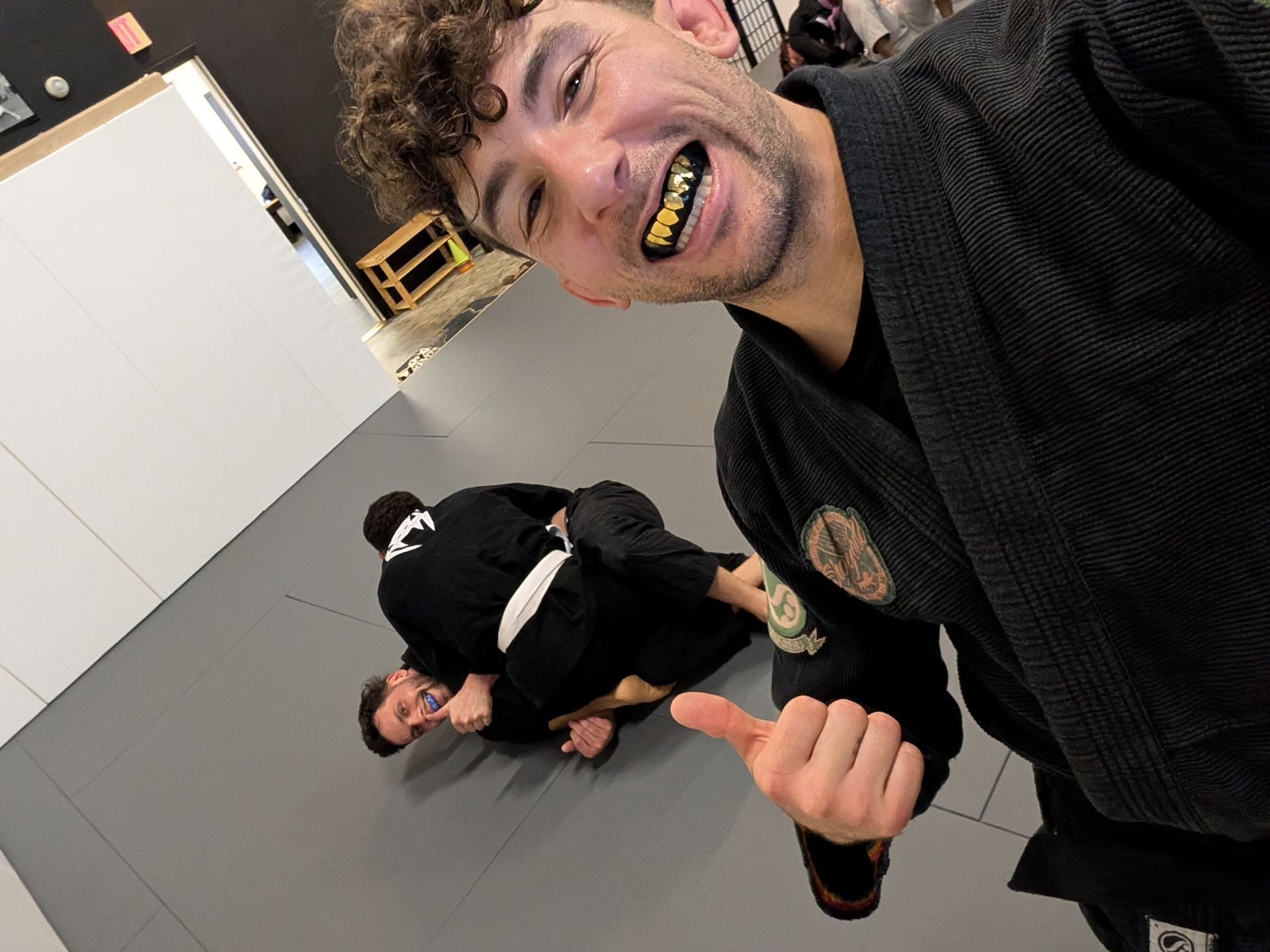
Jiu Jitsu is more than a workout here in Manalapan - it is a practical skill that reshapes confidence, health, and connection.
In Manalapan, NJ, routines get busy fast: work, school, commuting, sports schedules, and the constant pull of screens. We see it every week on the mats. People want to feel stronger, calmer, and more capable, but they also want an activity that fits real life and keeps them coming back.
That is where Jiu Jitsu stands out. It is a training method that improves fitness and self-defense while also building patience, resilience, and a sense of belonging. If you have been looking into martial arts in Manalapan, NJ, it helps to understand why this one has become such a powerful driver of positive change, especially for families, professionals, and first responders.
This article breaks down what we focus on day to day, what you can expect as a beginner, and how consistent Brazilian Jiu Jitsu in Manalapan, NJ can ripple outward, improving not just individual lives but the wider community too.
Why Manalapan Keeps Turning to Jiu Jitsu
Manalapan is family-centered, but it is also demanding. Adults are juggling stress and sedentary work. Kids are navigating social pressure, distractions, and sometimes anxiety that is hard to put into words. When people ask us what makes this training different, our answer is simple: it teaches you to solve problems under pressure, calmly, with control.
Brazilian Jiu Jitsu is known for leverage, technique, and positional control. That means you are not trying to overpower someone. You are learning how to manage distance, balance, grips, timing, and body mechanics. For many students, this is the first time fitness feels like a skill rather than a chore.
The popularity is not just local. About 6 million people train globally, with roughly 750,000 in the United States, and interest has doubled in the past decade. Growth like that happens when a sport delivers results that people actually feel in daily life.
The Physical Benefits You Notice First (and the Ones You Keep Later)
A lot of people start because they want to get in shape. That is a good reason. Jiu Jitsu is physically demanding, but in a way that is usually more engaging than repetitive gym workouts.
Research on Brazilian Jiu-Jitsu points to measurable improvements in cardiovascular health, muscular strength, endurance, flexibility, and overall injury prevention when training is structured well. The movement patterns are varied: you push, pull, bridge, rotate, post, and scramble, then you learn to do those things with better mechanics over time.
What we like most is the practicality. You are not just moving to move. You are learning how to keep your base, how to stand up safely, how to protect your joints, and how to breathe when you are tired. Those habits translate outside the academy, whether you are playing with your kids, working a physical job, or just trying to feel better in your own body.
How we keep training sustainable for real people
We build our classes around long-term progress. That includes controlled drilling, gradual intensity, and coaching that encourages smart decisions. Jiu Jitsu can be intense, but it does not have to be reckless. Injury data suggests BJJ has lower injury rates than sports like judo, MMA, taekwondo, or wrestling, and beginners can reduce risk even further with solid fundamentals and good pacing.
If you are new, we would rather see you train consistently than try to win every round on day one.
The Mental Health and Stress Relief Side is Not Just Hype
Manalapan has plenty of high-achievers: professionals, parents, student athletes, and first responders. Many carry stress quietly. One of the most consistent benefits students report is that training gives your mind somewhere productive to go.
During sparring, you cannot multitask. You are fully present. You are solving immediate problems: posture, grips, angles, escapes. That focus works like a reset button. You walk in with a busy brain, and you walk out with a clearer one.
Studies comparing beginners to higher-belt practitioners show advanced students tend to demonstrate greater mental strength, resilience, self-efficacy, self-control, and life satisfaction, along with fewer mental health disorders. The encouraging part is that these qualities are linked to training experience. In other words, the process itself builds the mindset.
Neuroscience discussions around grappling also highlight brain changes tied to resilience and focus, and some reports point to confidence gains that outperform more traditional training models by a notable margin. In plain terms: consistent practice changes how you respond to challenge.
Youth Training: Confidence, Self-Control, and Better Behavior at Home and School
Parents in Manalapan often come to us with similar goals: improve focus, build confidence, reduce anxious energy, and help kids handle conflict without getting pulled into drama.
Youth research on BJJ is especially promising. Training 1 to 3 times per week is associated with measurable self-control gains, improved social skills, and more pro-social behavior, while reducing aggression and hyperactivity. One of the most important distinctions is that Brazilian Jiu Jitsu can reduce aggression rather than amplify it, because control is built into the rules, the positions, and the culture.
We see this in everyday moments. Kids learn to wait their turn, listen closely, and keep trying when something feels awkward. That last part matters. Learning a new movement can be frustrating. Learning to stay calm through that frustration is a life skill.
What youth students tend to learn quickly
Not every child progresses at the same pace, and that is fine. But these are common early wins we see:
• Better emotional regulation when something feels unfair or difficult, because training normalizes small setbacks
• Improved posture, balance, and coordination from consistent movement and mobility work
• Stronger social confidence from partnering up, communicating, and practicing respectful boundaries
• Increased focus because instructions are short, specific, and immediately applied
• Healthier responses to conflict by using calm problem-solving instead of impulsive reactions
Parents also report broad benefits: mood improvements, mental flexibility, and a stronger sense of community. One survey-style report even showed 100 percent of parents noted a greater sense of community. That tracks with what we try to build every day: a place where kids feel known, not just enrolled.
First Responders and Controlled Force: A Community Safety Benefit
Manalapan is home to many first responders and public-facing professionals. In those roles, physical encounters can happen fast, and the goal is always control with minimal harm.
Studies on BJJ-based training for responders show real-world impact, including up to a 53 percent reduction in injuries during force-related arrests and a 23 percent reduction in Taser use. That is not about being more aggressive. It is about body awareness, positional control, and better decision-making under pressure.
Even if you are not in law enforcement, the principle matters. Jiu Jitsu is a system of controlled responses. You learn how to slow situations down, stabilize, and choose options that avoid escalation. That mindset can influence how you carry yourself in public, how you de-escalate conflicts, and how you protect yourself if you absolutely must.
What to Expect in Our Classes (Beginner to Advanced)
If you are considering martial arts in Manalapan, NJ, one of the biggest questions is what the first month actually feels like. Most beginners worry about two things: getting hurt and feeling out of place.
We take both seriously. A well-run room is structured. You learn how to fall, how to tap, how to train with partners, and how to move safely before intensity ramps up. You will sweat, but you will also laugh a little when you realize how technical it is. That learning curve is real, and it is part of the fun.
The training flow most students settle into
Here is a simple path we often recommend, especially if you want results without burning out:
1. Train 2 classes per week for the first month to build comfort with positions, tapping, and pacing
2. Add a third session once your recovery improves and you feel less mentally overloaded
3. Spend extra time on mobility drills and breathing, because joint health and calm movement matter
4. Focus on defense first: posture, frames, escapes, and safe stand-ups before chasing submissions
5. Track small wins weekly, like surviving longer, remembering one grip sequence, or staying calmer
That approach keeps you progressing steadily. It also supports the bigger goal: becoming harder to shake, not just tougher for one day.
Community Impact: How the Mats Spill Into Manalapan Life
The most meaningful part of Jiu Jitsu is not just the technique. It is what changes around it.
When adults train consistently, stress management improves. People sleep better, eat better, and carry themselves with more confidence. When kids train, they often communicate more clearly, handle frustration better, and show more respect at home. When first responders train, community interactions can become safer through better control and reduced injury risk.
There is also a quieter community benefit: connection. Many residents feel isolated even in a suburban town. Training creates regular, face-to-face interaction with a shared purpose. You learn each other’s names. You problem-solve together. You hold each other accountable. That sense of belonging is not fluffy. It is protective, especially in a time when loneliness is common.
Safety, Culture, and What “Good Training” Really Means
A common question is whether Jiu Jitsu is safe for beginners or kids. With proper instruction and a respectful environment, it can be. Data indicates novices experience more training injuries than competition injuries, which sounds surprising until you remember that beginners make unpredictable movements. The fix is coaching, structure, and controlled intensity.
We build safety into the culture:
• We teach tapping early and treat it as smart training, not quitting
• We emphasize controlled rounds, especially for new students
• We coach positional awareness so you protect your neck, shoulders, and knees
• We encourage consistency over ego-driven intensity
• We keep standards for cleanliness and mat etiquette so the room stays healthy
When you combine those habits with progressive coaching, training becomes something you can keep for years. That long runway is where the deeper benefits show up.
Take the Next Step
Building a stronger, healthier Manalapan does not always require a huge life overhaul. Often it is one or two consistent sessions per week, a skill you keep refining, and a community that expects the best from you in a supportive way. That is what we aim to create, and it is why Jiu Jitsu remains one of the most practical tools we can offer for lasting change.
If you want to experience this in person, Lucky Cat Grappling Co. is where we bring these principles to life through structured classes, welcoming culture, and training that meets you where you are while still challenging you to grow.
Become part of a community committed to growth and respect by joining a Jiu-Jitsu class at Lucky Cat Grappling Co.