
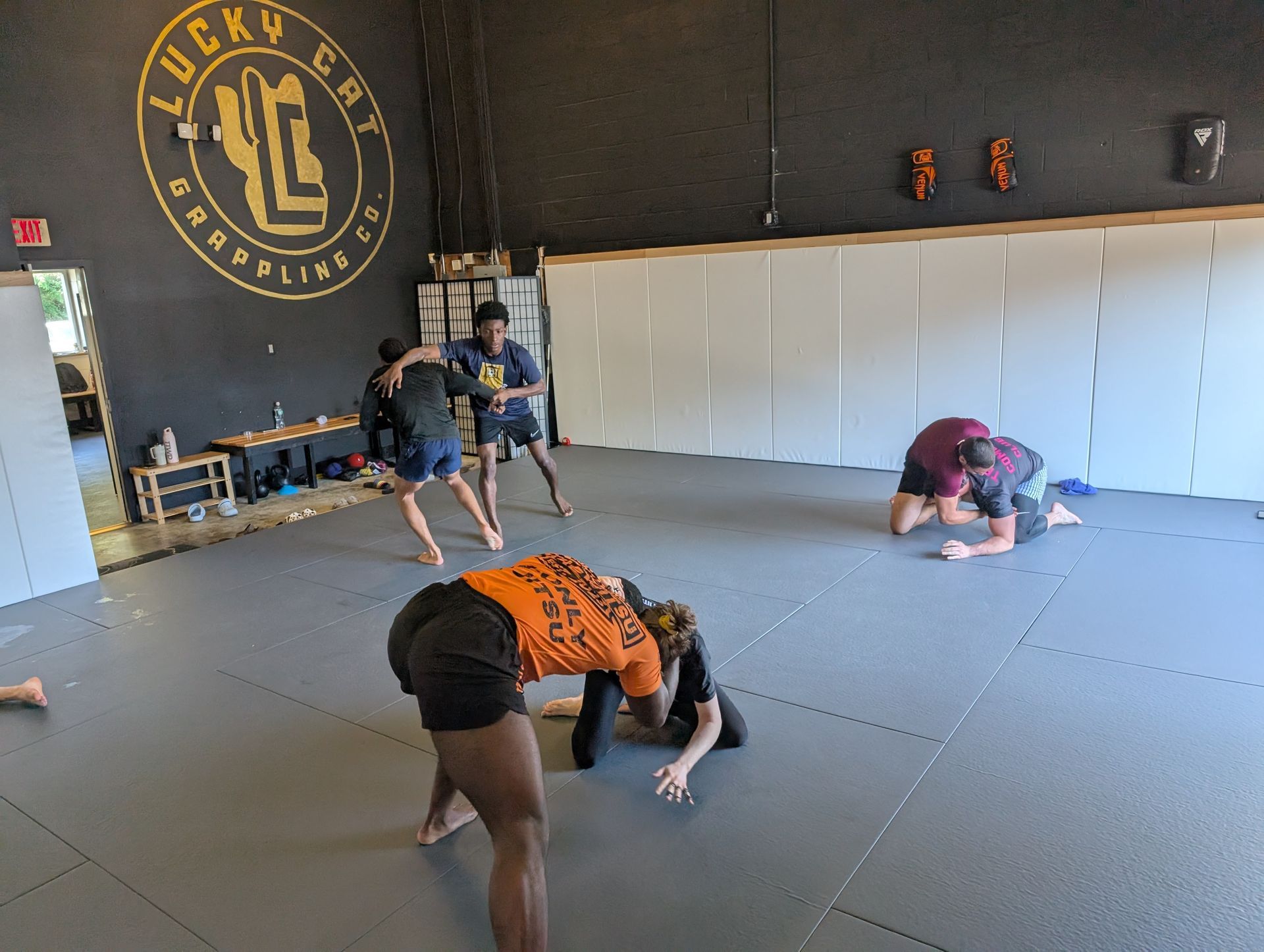
Confidence is not something you either have or you do not, it is something we build rep by rep until it feels real.
Walking into your first Jiu Jitsu class can feel like stepping into a room where everyone already knows the rules. We get it. The mats, the uniforms, the grips, the quick conversations about positions you have never heard of, it can all make you feel one step behind before you even start.
Our job is to make that first step feel doable. Confidence on the mat is not about being fearless, loud, or aggressive. It is about learning how to stay calm in unfamiliar situations, make small decisions under pressure, and trust that you can handle the next moment even if you do not have the whole picture yet.
If you are considering Brazilian Jiu Jitsu in Manalapan, NJ, this guide will help you understand what confidence really looks like for beginners, how it develops, and what you can do from day one to feel more comfortable in class.
What confidence really means in Jiu Jitsu
Confidence in Jiu Jitsu is practical. It is not the idea that you will win every round or never get stuck. Most of the time, beginner confidence shows up as smaller, quieter wins that add up over weeks.
Here is what we see most often when confidence is starting to click:
• You remember to breathe even when someone is applying pressure
• You can name the position you are in, even if you cannot escape yet
• You ask a question without feeling awkward about it
• You stop apologizing for being new and start focusing on learning
On the mat, confidence is the ability to stay present. You do not need to dominate to feel confident. You just need a plan you can try and the patience to keep trying it.
Why beginners often feel nervous, and why it is normal
Nerves usually come from uncertainty, not weakness. In the beginning, you are learning movement patterns and etiquette at the same time. You are also dealing with close contact, being off balance, and getting used to the pace of training. That is a lot to process.
A common misconception is that experienced students are naturally confident people. In reality, confidence is usually earned the slow way. Everyone gets tapped. Everyone has rounds where nothing works. The difference is that experienced students have been there enough times that it stops feeling personal.
When you understand that discomfort is part of the process, it becomes less scary. That shift matters.
How Jiu Jitsu builds confidence, the three mechanisms that matter most
We see confidence grow through a few predictable pathways. If you focus on these, you will feel progress even before your technique feels sharp.
Learning from mistakes without spiraling
In Jiu Jitsu, the feedback is immediate. If you leave your arm in the wrong place, you might get submitted. If your posture breaks, you feel it instantly. That sounds intimidating, but it is actually useful.
Instead of wondering whether you are improving, you can track it in clear ways:
- You recognize the mistake faster
- You fix it sooner in the round
- You do not repeat it as often
Confidence grows when you see that mistakes are not a dead end. They are information.
Facing discomfort and staying calm anyway
Pressure is part of grappling. Someone is trying to control your posture, your hips, your breathing rhythm. Early on, the body wants to panic. With consistent training, you learn that you can survive that moment, slow down, and solve problems.
This is one of the biggest mental benefits of training. Staying calm while your heart rate spikes is a skill, and it transfers into daily life more than people expect.
Hitting milestones that only you can feel
The best beginner milestones are not flashy. They are personal.
Maybe your first milestone is escaping side control once. Maybe it is remembering how to frame. Maybe it is simply finishing class without mentally checking out halfway through.
Each small milestone tells your brain: you can learn hard things. That is confidence.
What to expect in your first few weeks on the mat
Beginners often assume the first few weeks should feel smooth. Usually, it is the opposite. Your first month is mostly about orientation and survival, and that is fine.
Week 1: Learning the rhythm
You will learn how class flows, how to partner up, and how to move safely. You may feel clumsy. Most people do. We would rather you move carefully than fast.
Weeks 2 to 3: Pattern recognition starts
You begin noticing repeated scenarios. You might not know the “right” answer yet, but you recognize the question. That is progress.
Weeks 4 and beyond: Your first real “aha” moments
You will start catching yourself doing something correctly without thinking too hard. It might be a basic hip escape, a posture reset, or a grip break. This is where confidence begins to feel earned, not imagined.
The beginner mindset that makes confidence grow faster
Confidence is not just technique. It is how you relate to the process. A helpful mindset is to treat each class like practice, not a test.
Here are a few mental habits we encourage because they keep you steady:
1. Show up consistently, even when you feel awkward
Consistency beats intensity for beginners. Two or three steady sessions a week usually builds confidence faster than trying to do everything at once.
2. Choose one focus for the day
If you try to remember every detail, you will feel behind. If you focus on one concept, like framing or posture, you will feel improvement sooner.
3. Expect to tap, and tap early
Tapping is not failure. It is communication and safety. When you tap early, you stay relaxed and you get more training time. That is a win.
4. Measure progress by decision making, not winning
A good round for a beginner might mean you remembered to keep your elbows in. That matters more than who “won.”
Simple tools that help you feel calmer right away
A lot of confidence is physical regulation. When your body feels controlled, your mind follows.
Breathing under pressure
When you get stuck, try this:
- Inhale through your nose for a slow count of 3
- Exhale for a slow count of 4
- Keep your jaw unclenched and shoulders down
You will still feel pressure, but you will think more clearly. That is the point.
Visualization that is actually useful
Visualization does not need to be dramatic. Before class, imagine one sequence you are working on, even if it is basic:
- Grip, posture, step, hip movement, finish
When your brain has a simple template, you feel less lost.
A pre-class routine that signals “I belong here”
Even small routines help. Arrive a few minutes early, warm up gently, and mentally pick your one focus. When you do the same steps each time, your nervous system treats class as familiar faster.
Rolling etiquette that builds confidence instead of stress
Rolling, or sparring, is where many beginners feel most self conscious. The goal is not to “prove” anything. The goal is controlled practice.
We emphasize a few expectations that protect your confidence and your training partners:
- Use controlled movement, especially early on
- Communicate if you are unsure about intensity
- Ask for a lighter round if you need it
- Avoid sudden explosive bridging if you are trapped
- Reset when needed, learning beats chaos
Confidence comes from safe repetitions. Safe repetitions require trust and clear communication.
Common beginner fears, answered plainly
“What if I gas out in front of everyone?”
It happens. Conditioning is part of the journey, and nobody worth training with judges you for needing a breather. Take a round off, focus on breathing, then jump back in.
“What if I do something wrong?”
You will. And we will coach you through it. Jiu Jitsu has a lot of details, but you do not need to master them on day one. You just need to learn one correction at a time.
“Do I need to be athletic first?”
No. Training is how you build athleticism. We adapt the pace and help you develop movement patterns safely.
How we structure training to help beginners feel confident
A beginner friendly environment is not softer, it is clearer. You need context, repetition, and feedback that makes sense.
In our classes, we focus on:
- Fundamental positions and concepts you can reuse everywhere
- Progressive resistance so you do not get thrown into the deep end
- Coaching cues that give you one or two fixes, not ten at once
- Partner culture that values learning and control
That structure is what turns “I have no idea what I am doing” into “I have something to try.”
Small wins to look for, your confidence checklist
If you want a simple way to track progress, look for these wins over your first couple months:
• You can name common positions like guard, mount, and side control
• You remember to frame before trying to escape
• You notice when your breathing gets shallow and correct it
• You ask a teammate to start in a position you want to practice
• You leave class feeling tired but proud, not defeated
These are real signs you are becoming more capable. That is what confidence is built on.
Ready to Begin
Building confidence in martial arts in Manalapan, NJ comes down to consistent practice in an environment that keeps you learning, not panicking. The more time you spend on the mat, the more you realize confidence is not a personality trait. It is a skill you train.
If you want a place to start that feels structured, welcoming, and focused on real progress, we built our beginner experience to meet you where you are at. You can take that first step at Lucky Cat Grappling Co., and let the confidence follow after that, one class at a time.
Experience how Jiu-Jitsu builds resilience and focus by joining a class at Lucky Cat Grappling Co.