
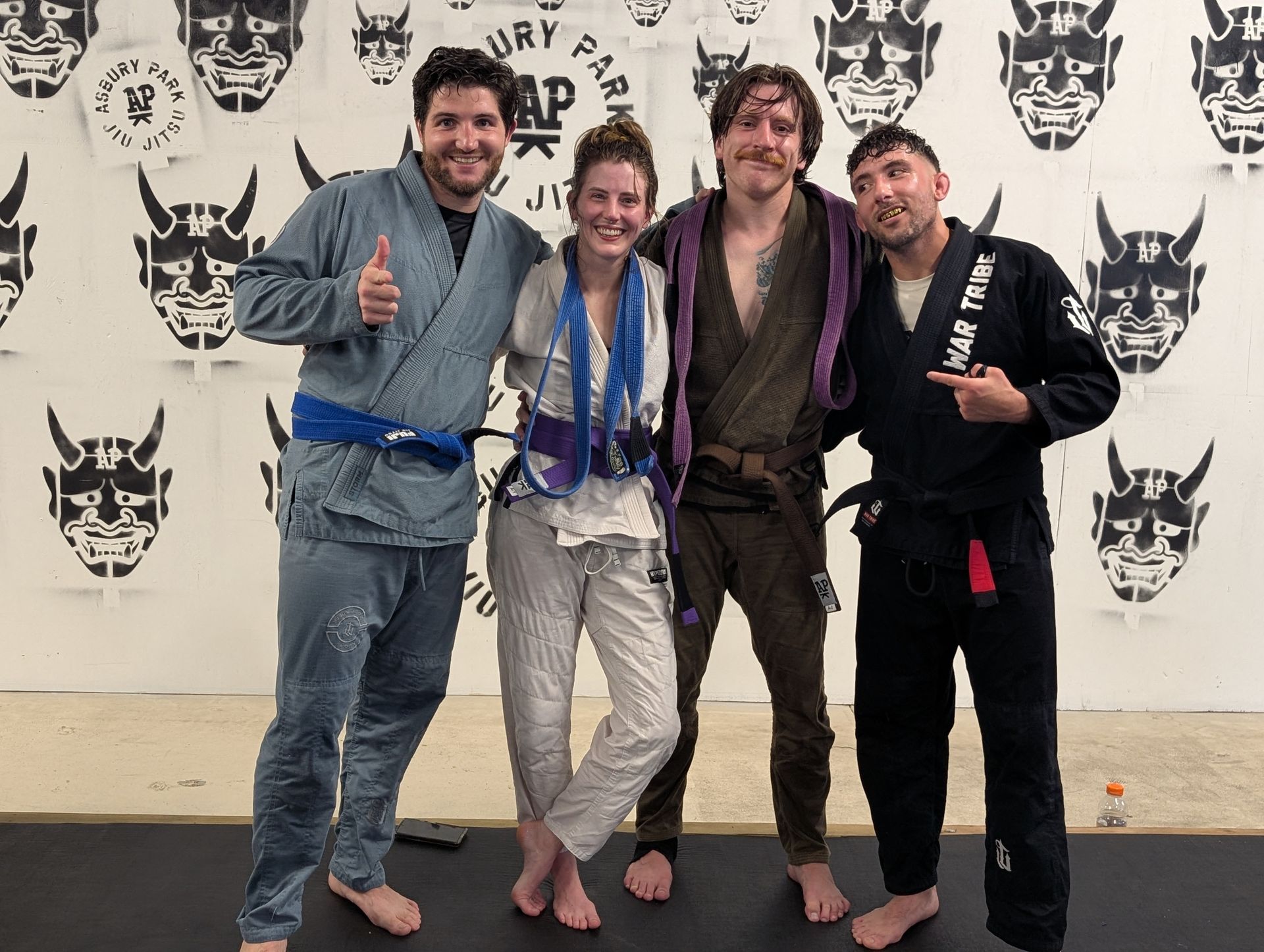
Jiu Jitsu is one of the few fitness habits where the people beside you quickly become part of your week and part of your life.
In Manalapan, it is easy to get stuck in a loop of work, errands, kids activities, and the same familiar routines. A lot of adults and teens want community, but we do not always know where to find it without forcing small talk. Jiu Jitsu solves that in a surprisingly practical way because you do not just show up and stand around. You train together.
We see it every week: friendships form through partner drills, shared problem solving, and the simple relief of having a place where your phone can stay in your bag for an hour. Whether you come in for fitness, self defense, or a new challenge, the social benefits tend to show up fast and stick around.
When people ask what makes Brazilian Jiu Jitsu in Manalapan, NJ feel different from typical gym culture, the answer is not hype. It is structure. Training creates trust, and trust creates connection.
Why Jiu Jitsu Builds Friendships Faster Than You Expect
Most social activities let you stay on the surface. You can be friendly, but you can also keep a comfortable distance. Jiu Jitsu does not work that way, and that is a good thing. The training is close contact, technical, and cooperative even when it looks intense. You and a partner are literally helping each other learn.
That shared responsibility matters. In drilling, you take turns. In positional sparring, you troubleshoot together. In live rounds, you protect your partner while pushing your own pace. Over time, the people you train with become the people who understand your wins and your rough days without you needing to explain everything.
Research lines up with what we experience on the mats. In one Brazilian Jiu Jitsu program, 100 percent of participants reported a strong sense of community, and about 25 percent noted resilient, lasting friendships. That is a real number, but it also matches something you can feel in a room where everyone is learning together.
Trust is not a slogan in training
Trust is built through small, repeated moments. You tap, your partner releases. You get caught, you reset, you try again. That is the foundation of a lasting friendship: someone respects your boundaries, and you respect theirs. It is quiet, consistent, and it adds up.
Shared challenges create shared language
Jiu Jitsu gives you a common language quickly. Everyone understands what it means to struggle with shrimping, to finally hit a clean sweep, or to gas out halfway through a round and laugh about it afterward. It is not forced bonding. It is earned camaraderie.
The Class Environment That Turns Strangers Into Training Partners
A big reason friendships form in our room is that the format requires cooperation. You do not just watch an instructor and go lift alone. You pair up, you communicate, you adjust, and you learn how to be a good partner. That is a social skill with a purpose.
Even if you are new and a little shy, the structure helps. You do not have to figure out how to introduce yourself to ten people. You start with one partner, then another. Over a few weeks, you recognize faces, and the room starts to feel familiar.
We also make sure beginners are not thrown into the deep end. You will learn how to move safely, how to tap early, and how to keep training respectful. That safety and clarity makes it easier to relax, and it is hard to make friends when you are tense the whole time.
The hidden social benefit: communication under pressure
Jiu Jitsu improves communication in an oddly practical way. You learn how to ask questions, give quick feedback, and stay calm when something feels uncomfortable. Those habits carry into daily life. Studies have also found boosts in confidence and mood among martial arts participants, with 87.6 percent reporting increased confidence and 96.9 percent noting mood improvements. When you feel better, you connect better. It is not complicated, but it is real.
Jiu Jitsu in Manalapan: Community for Busy Schedules
Manalapan is suburban, family oriented, and busy. That combination is great in many ways, but it can make adult friendships harder to maintain. When every week is a calendar puzzle, you need an activity that builds consistency instead of demanding a perfect schedule.
Training gives you that anchor. You see the same people on similar days. You check the class schedule, you show up, and you do the work. That repeated contact matters more than people realize. Friendships rarely come from one big event. They usually come from small routines.
For many locals searching for martial arts in Manalapan, NJ, the appeal is not only learning techniques. It is finding a place that feels like a second home without being clingy about it. You can train, talk for a few minutes, then head back to real life feeling recharged.
How Partner Drills Create Real Connection
Partner drills look simple from the outside, but they are relationship building machines. You are learning timing, balance, and control while also learning how to take care of someone else in motion.
Here is what tends to happen naturally:
- You start recognizing who gives helpful feedback and who brings steady energy.
- You develop trust with partners who move safely and respect the tap.
- You build mutual accountability because you do not want to leave your partner without someone to drill with.
- You celebrate progress together, even small stuff like better frames or cleaner guard retention.
That is why the friendships can last. You are not bonding over talk. You are bonding over effort.
The Social Side of Rolling Without the Intimidation
Live sparring, often called rolling, is where a lot of friendships deepen. It is also where many beginners feel nervous. That is normal. The good news is that the culture of safe training matters more than your athletic background.
We treat rolling as practice, not as a street fight and not as a tryout. You learn to manage intensity, and you learn that your partner is not your enemy. Over time, rolling becomes a kind of conversation. You try something, your partner responds, you adjust. It is competitive in the way chess can be competitive, but with sweat and problem solving.
A 2024 trend in martial arts research highlights that camaraderie is a major retention factor, with gyms functioning like second homes where shared struggles and victories create real bonds. We see that dynamic clearly when people start staying a few minutes after class to talk technique, work through questions, or just catch up.
What if you are brand new?
New students worry about being the awkward one. In practice, you are surrounded by people who remember exactly what it felt like on day one. Our job is to make sure you have guidance, clear expectations, and the right partners. You do not need to be outgoing. You just need to show up.
Friendships Across Ages: Kids, Teens, and Adults
One of the best parts of training is that it works for different life stages without forcing everyone into the same experience. Kids learn social skills through structure and respect. Teens get a space where confidence is earned, not performed. Adults get community without the pressure of a social club.
Research also points to improved empathy and collaboration in BJJ settings, including a 10 percent boost in empathy and 20 percent rise in teamwork in family related contexts. When families train around the same time, it becomes easier to support each other at home too, because everyone understands what practice takes.
Kids: learning to be a good partner
For kids, the friendship building is direct. They learn how to listen, how to take turns, and how to handle small conflicts without melting down. The mats give them a place to practice patience and respect in a way that feels active.
Adults: rebuilding a social circle
Adults often tell us they did not realize how much they missed having a consistent group until they started training. Jiu Jitsu creates a routine where you see familiar faces, exchange quick encouragement, and slowly build real rapport. It is steady, not forced.
What Makes These Friendships Last
A lot of adult friendships fade because there is no shared activity that keeps the relationship alive. Training changes that. You have built in touchpoints every week. You also have ongoing goals, so conversations have substance. You can ask how someones guard is coming along, what they are focusing on, or whether they are coming to open mat.
If you train at least twice a week, you also tend to notice changes in resilience and focus. A 2024 study found 92 percent of martial arts participants training twice weekly reported enhanced resilience, focus, and community ties, driven partly by the neuroplasticity that comes from learning complex techniques. That growth mindset becomes contagious, and friends keep friends consistent.
How to Get More Social Value From Your Training
If building friendships is part of your goal, you can support that outcome with a few simple habits. None of this requires being the loudest person in the room. It is more about being consistent and being a good teammate.
1. Pick two class times you can commit to and treat them like appointments
2. Introduce yourself to your drilling partner and ask their name again if you forget
3. Stay five minutes after class to ask a question or thank a partner for the round
4. Try open mats or group drills to meet training partners you do not usually pair with
5. Track small progress milestones and share them, because celebration builds bonds
These are small actions, but they matter. The mats reward consistency, and so do friendships.
Ready to Begin
If you want a community that feels earned, not manufactured, Brazilian Jiu Jitsu is a strong place to start. The friendships that grow out of training tend to last because they are built on trust, shared effort, and showing up for each other on ordinary days, not just the highlight reel days.
That is exactly what we aim to create at Lucky Cat Grappling Co. in Manalapan, NJ: a place where you can train seriously, improve steadily, and end up with real connections along the way, not just another short lived hobby.
Train with experienced instructors and a supportive team by joining a Jiu-Jitsu class at Lucky Cat Grappling Co.