
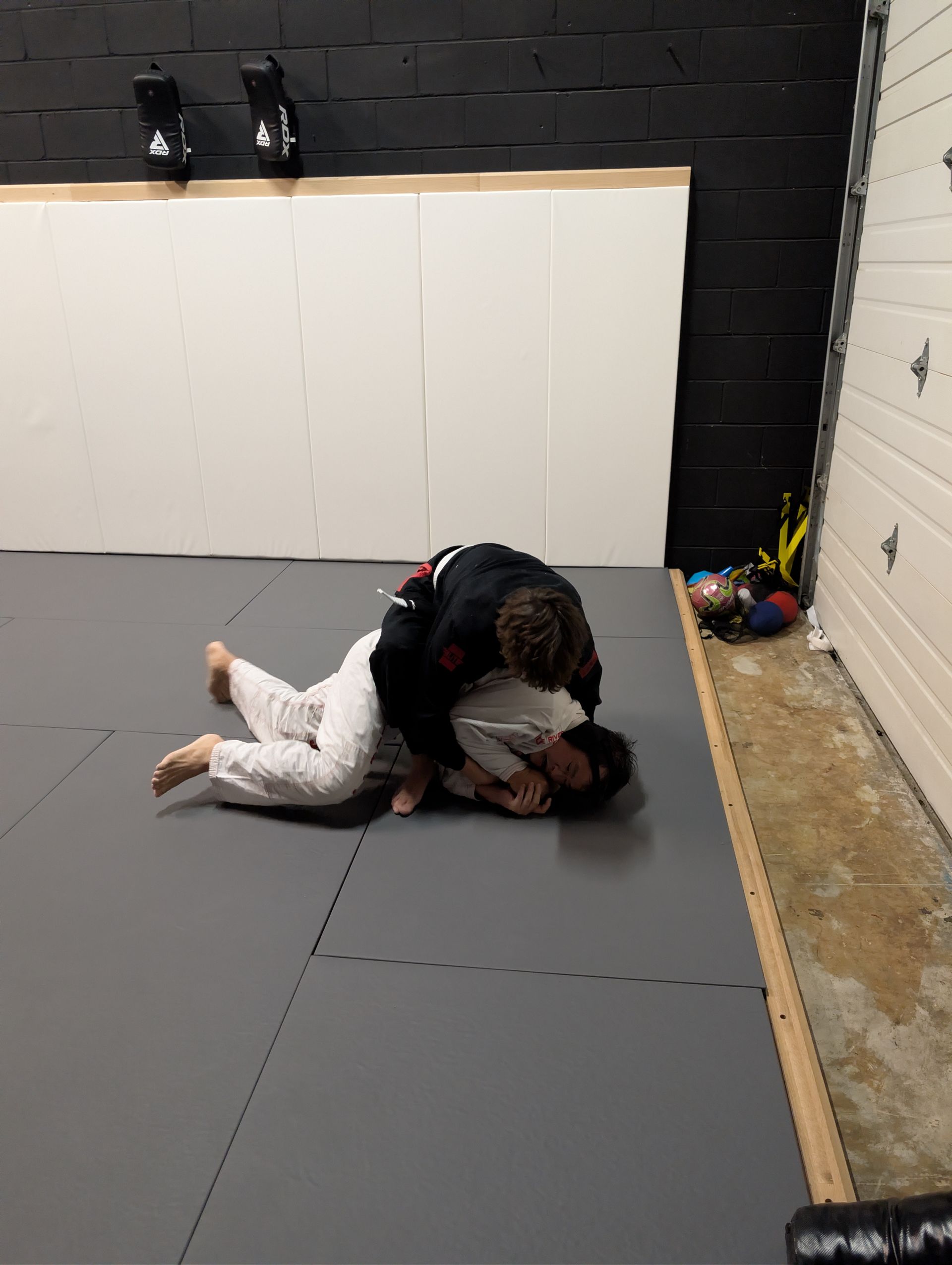
Brazilian Jiu-Jitsu turns everyday stress into a skill you can train, measure, and steadily improve.
Resilience is not a personality trait you either have or you do not. It is a practice, and in our experience, Brazilian Jiu-Jitsu is one of the most practical ways to build it because you face small, manageable problems every class and learn to stay present while solving them.
In Manalapan, NJ, a lot of people are looking for training that does more than burn calories. You want a place where you can get stronger, yes, but also calmer under pressure, harder to rattle, and more confident that you can handle hard things without spiraling.
That is what we build through our Adult Jiu-Jitsu in Manalapan, NJ and Youth Jiu-Jitsu in Manalapan, NJ programs: steady pressure, smart coaching, supportive training partners, and a culture where progress is earned one round at a time.
What resilience and grit really mean on the mats
People sometimes talk about grit like it is just toughness. We see it more as follow-through: the ability to keep showing up, keep learning, and keep adapting even when the outcome is uncertain. On the mats, you do not get to control everything. Someone will be stronger than you, faster than you, or simply more experienced than you, and you still have to make good decisions.
Resilience is similar, but it is more about recovery and stability. You get put in a bad position, you feel that quick flash of discomfort, and then you settle down and start working again. That pattern is not theoretical. You practice it with your breathing, your posture, your frames, and your willingness to reset after mistakes.
Modern research lines up with what we see daily: experienced practitioners tend to report higher mental strength, self-efficacy, and life satisfaction, while reporting fewer mental health disorders than beginners. There is also evidence that resilience rises with experience, and that combat-sport athletes score higher in grit than physically inactive individuals. The point is not that a belt color magically changes your life. The point is that consistent training changes how you respond to stress.
Why Brazilian Jiu-Jitsu builds mental strength differently than most workouts
A lot of fitness routines are linear: lift the weight, run the miles, repeat. BJJ is more like problem-solving with your whole body. You are constantly reading balance, timing, pressure, and reactions. When you get it right, it feels almost quiet. When you get it wrong, you learn immediately.
That immediate feedback is a big deal for resilience. It teaches you to separate effort from outcome. You can do many things correctly and still get caught, and you can do one small thing better next round and feel the difference. Over time, you start trusting your ability to figure things out under pressure, which is basically self-efficacy in action.
Research supports this idea of progression. Studies show that mental strength and self-efficacy tend to increase with experience, and that higher ranks report stronger scores than beginners. We also pay attention to a reassuring finding: training does not appear to increase overall aggression, anger, or hostility. Instead, it tends to improve self-control, which is exactly what most parents and adults want.
The resilience loop you train every class
We like to think of BJJ as a simple loop you repeat until it becomes part of how you operate outside the gym too. It is not flashy, but it works.
1. You enter a hard situation with limited information
2. You regulate your breathing and attention
3. You try a technical solution
4. You adjust when it fails
5. You recover, learn, and come back better
That loop shows up in work stress, school pressure, tough conversations, and even things like sticking to a routine when motivation dips. It is not that BJJ makes life easy. It makes you more capable when life is not easy.
Learning to stay calm under pressure (without shutting down)
One of the first things most new students notice is how quickly stress shows up during live training. Your heart rate jumps, your mind speeds up, and you want to use strength to escape. We coach you to do the opposite: slow down, find structure, and make your movements efficient.
This is where resilience becomes physical. You learn that panic wastes energy. You learn that a bad position is not the end, it is a place to work from. You learn to accept temporary discomfort while you build a path out.
For adults, this tends to transfer into daily life in a pretty practical way. You get better at pausing before reacting. You get better at handling a tense moment without escalating it. It is not dramatic, but it is noticeable, and your family usually notices first.
Why “losing” in training is actually the point
BJJ gives you an unusual advantage: you can fail safely, often, and with guidance. You tap, you reset, you try again. That is how people build grit without burning out. You are not trying to be perfect. You are trying to be slightly better than last week.
We keep the room structured so you can take these small risks. That means controlled rounds, appropriate pairings, and clear expectations about how to train with care. When your environment is stable, you can push yourself without feeling like you are gambling with your safety.
And that matters for mental health too. There is evidence that regular participation in jiu-jitsu can reduce PTSD symptoms, anxiety, and depression, including measurable improvements in disabled combat veterans. While training is not a substitute for professional care when you need it, it can be a powerful non-clinical support that builds connection, confidence, and routine.
Youth Jiu-Jitsu in Manalapan, NJ: grit that looks like self-control
Parents usually come in asking the same core questions: Will my child be safe? Will this make my child aggressive? Will this help with confidence?
We take those concerns seriously, and the research is comforting here. Training is linked to higher self-control, and studies do not show increases in anger, hostility, or total aggression. That matches what we aim for on the mats: respect, boundaries, and emotional regulation, not bullying energy.
In our youth classes, resilience looks like a kid getting stuck, taking a breath, and trying again. It looks like listening, following steps, and learning that effort matters even when it is not instantly rewarded. It also looks like social confidence that is earned, not performed. Kids learn how to be in a room, partner up, and work through problems with another person.
What kids tend to build first in our youth program
• Better frustration tolerance when a technique takes time to click
• Stronger listening skills and attention during coached drills
• Confidence from consistent progress, not from “winning”
• Respectful physical boundaries through clear tapping and safety rules
• A calmer response to pressure, both on the mat and at school
Adult Jiu-Jitsu in Manalapan, NJ: confidence that is earned, not hyped
Adults show up with different goals. Some want a new challenge. Some want serious skill-building. Some want a place to train that also helps them manage stress and feel like themselves again. BJJ can meet all of those goals, but only if the process is realistic.
We structure training so you can start where you are. If you are brand new, you learn how to move safely, how to tap early, and how to understand positions before you chase submissions. If you have experience, you get room to refine details, troubleshoot habits, and build a game that fits your body and your lifestyle.
The mental benefits come from that long-term approach. Research suggests that mental strength and life satisfaction rise with rank, and that self-efficacy correlates strongly with training experience. The deeper message is simple: consistency changes you. Not overnight, but steadily.
Belt progression as a built-in resilience metric
A nice thing about Brazilian Jiu-Jitsu is that it gives you a clear path. Belts are not just rewards. They are checkpoints that reflect skill, composure, and decision-making under pressure.
We use that progression to help you see your resilience improving in concrete ways. Early on, the win might be surviving a round without holding your breath. Later, it might be recovering guard calmly instead of scrambling. Eventually, it might be taking a bad position and working out with patience, which is a very real kind of grit.
This also answers a question we hear a lot: “How long until I feel mentally stronger?” There is no single timeline, but studies indicate that mental strength and self-control increase progressively with rank, not only with time. In other words, quality of training and steady development matter.
Safety, structure, and the “right amount” of hard
Resilience training only works when the environment is responsible. Our job is to make training challenging without making it reckless. That includes how we teach techniques, how we manage sparring intensity, and how we build a culture where tapping is normal and respected.
If you are dealing with anxiety, trauma history, or you just feel nervous about contact sports, we take a steady approach. You can scale intensity, communicate boundaries, and build comfort over time. Many people find that the combination of physical work, focused attention, and supportive partners becomes a reliable outlet. Not perfect every day, but reliable.
How BJJ carries over into real life in Manalapan
Training is only meaningful if it changes something outside the gym. For most students, the carryover is not about fighting. It is about how you handle pressure.
You might notice that you recover faster after a rough day. You might handle conflict with less heat. You might feel more capable in your body, which usually spills into better posture, better sleep, and more willingness to take on challenges you used to avoid.
For teens and adults, it can also be a healthy social anchor. You show up, you train, you get to know people through consistent effort, and you leave with that tired-but-clear feeling that is hard to get anywhere else.
Take the Next Step
If you want a practice that builds real grit, not just motivation quotes, Brazilian Jiu-Jitsu gives you a way to train resilience one round at a time. When you stick with it, the changes show up in your breathing, your focus, and your ability to stay steady when things get uncomfortable.
That is exactly what we organize for at Lucky Cat Grappling Co. here in Manalapan, NJ: clear coaching, a structured path for beginners and experienced students, and programs that support both Adult Jiu-Jitsu in Manalapan, NJ and Youth Jiu-Jitsu in Manalapan, NJ without turning training into chaos. When you are ready, we would love to help you start building that kind of mental strength at Lucky Cat Grappling Co.
Build stronger fundamentals and sharpen your technique by joining a Brazilian Jiu-Jitsu class at Lucky Cat Grappling Co.