
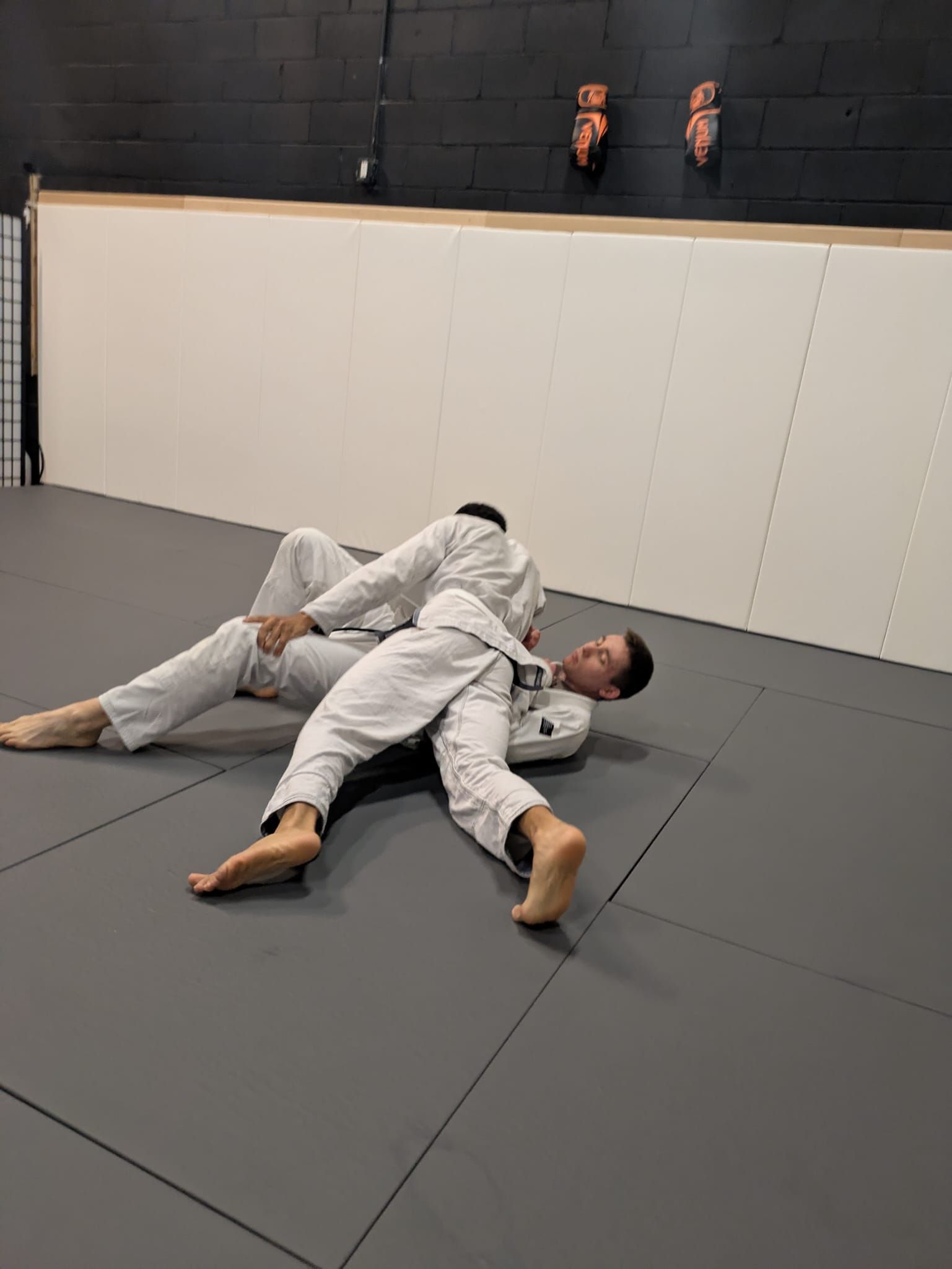
When kids learn to stay calm under pressure on the mats, that steadiness follows them into school, friendships, and everything in between.
In Manalapan, we see the same challenge over and over: kids are carrying a lot. Academic pressure, busy schedules, social stress, and a constant stream of screen time can make it harder for young people to build real confidence the old fashioned way, through effort and practice. That is one reason so many families are turning to Jiu Jitsu.
Jiu Jitsu is not about puffing up bravado or winning every moment. It is about learning how to respond when things are uncomfortable, unfamiliar, or difficult, and then doing it again next class with a little more composure. Over time, that repeatable process turns into resilience and grit.
Our youth classes are designed to make those lessons practical. Kids get a place where effort matters, progress is visible, and mistakes are normal. That combination sounds simple, but it is powerful, especially for today’s youth.
Why resilience and grit matter more than ever for kids
Resilience is the ability to recover after setbacks. Grit is the willingness to keep working toward a goal even when progress feels slow. We are not talking about pushing kids too hard. We are talking about teaching them how to keep going in a healthy, skillful way.
Many youth activities reward natural talent or quick wins. On the mats, we reward consistent practice. When your child learns a new escape, improves timing, or stays calmer in a tough position, the win is real, even if nobody is keeping a scoreboard.
Research on Brazilian Jiu Jitsu supports what we see in class. Youth participants and parents report strong improvements in confidence, reduced anxiety, and better commitment to goals. In one set of parent reports, 96.4 percent noticed improved confidence, 87.5 percent saw reduced anxiety, and 92.8 percent saw stronger commitment. Just as important, 96.9 percent reported life skills like respect and focus transferring into daily life.
That transfer is the whole point. We want the lessons to show up on a math test, during a tough conversation, or when your child is tempted to quit something that matters.
How Jiu Jitsu teaches grit through safe, repeatable challenge
Kids do not become gritty because we lecture them about grit. Grit shows up when kids face a challenge that is manageable, try a strategy, fail safely, adjust, and try again. Jiu Jitsu creates that cycle naturally.
In a typical round, a student may start in a disadvantage, like being pinned. We teach the steps to escape. The first attempts rarely work perfectly. That is normal. What matters is that the student keeps problem solving. With coaching, the student learns to breathe, frame, move the hips, and rebuild position. That is resilience in action, not just as a concept.
Because the training is structured, kids can measure progress. A student who once froze under pressure learns to move. A student who used to panic learns to slow down and think. Those wins are quiet at first, but they stack up fast.
Combat sports research also points to above average psychological resilience in trained athletes, especially when training emphasizes structured problem solving and overcoming challenges. That lines up with how we teach: clear goals, clear rules, and a steady climb in difficulty.
The no striking advantage: why grappling supports youth safety and self control
Parents often ask about safety, and that is a smart question. Our approach is grounded in controlled training, close supervision, and technique first learning. Jiu Jitsu is a grappling art, which means the focus is on positions, control, escapes, and submissions taught with care. There is no striking in our youth program.
That matters for two reasons. First, it lowers the risk profile compared to arts that revolve around punches and kicks. Second, it teaches self control as a requirement, not a suggestion. If a student moves recklessly, the technique fails and training stops. Control is built into the system.
We also use age appropriate drilling, clear partner rules, and a steady progression so kids are not thrown into situations beyond their readiness. The goal is not to overwhelm. The goal is to help your child feel capable.
This is one reason families looking for martial arts in Manalapan, NJ often find grappling a good fit. Kids can train hard, build real skills, and still stay within a framework that prioritizes control and respect.
What resilience looks like in a youth class (and why it works)
Resilience is not just “toughness.” In our classes, it looks like a few specific behaviors that you can actually spot.
Calm breathing under pressure
When a child is stuck in a tough position, the first impulse is to tense up. We coach kids to breathe, make space, and think one step at a time. This is a skill. Once kids learn it in training, you may notice it when homework gets frustrating or when emotions run hot at home.
Trying again after a mistake
Every kid slips up. A grip breaks. An escape fails. A teammate gets the position. We normalize that moment and turn it into learning. The message is consistent: mistakes are data, not a verdict.
Asking better questions
As students mature, we hear questions shift from “Why can’t I do this?” to “What do I need to change?” That is a huge leap in mindset. It is also a big part of grit: staying engaged with the problem.
Learning to lead and follow
Sometimes your child is the more experienced partner. Sometimes your child is the beginner. Both roles matter. Leading builds responsibility. Following builds humility and patience. Both feed resilience.
The brain side of it: focus, flexibility, and emotional regulation
Jiu Jitsu does something interesting to the mind. It demands focus because the feedback is immediate. If a student’s attention drifts, the position changes. The mats are honest like that.
Over time, kids build mental flexibility. They learn that there is rarely one correct answer. There are options, counters, and adjustments. That is the same mindset that helps in school. If one study strategy fails, try another. If one approach to a friendship problem does not work, rethink it.
This is also why parents have become more interested in BJJ as a support for youth mental health. Recent studies and parent reports highlight improvements in mood, anxiety reduction, and emotional balance with consistent training. We cannot promise a single activity solves everything, but we can say this: practicing calm under pressure, every week, tends to change how kids carry themselves.
Confidence that is earned, not given
Confidence is tricky. Empty confidence collapses when something goes wrong. Earned confidence grows because it is attached to real experiences.
In training, a child earns confidence in small, specific ways:
- Remembering steps to an escape
- Holding posture when somebody tries to pull them off balance
- Staying respectful even when frustrated
- Coming back after a tough round instead of shutting down
Parent feedback in youth BJJ is clear on this point. In the data we reference often, 96.4 percent of parents reported improved confidence in their child. That number makes sense because the confidence is built through proof. Your child feels progress, not just praise.
How our belt system helps kids stick with hard things
Kids need milestones. Not constant rewards, but clear markers that tell them their effort matters. The belt system provides that structure.
Belts are not just about technique lists. They reflect attendance, attitude, coachability, and how a student treats partners. That is important because grit is not only pushing yourself. It is also showing up consistently and being a good teammate.
We encourage families to think of belts as a long term map. When a student learns to commit to the process, even when progress feels slow, that is exactly the habit that transfers into school and life.
If you want a practical starting point, we usually recommend 2 to 3 classes per week for youth. That frequency is enough to build momentum without turning training into a chore.
A simple framework kids learn on the mats (and use off the mats)
When kids feel stuck, it helps to have a process. On the mats, we repeat a pattern that is easy to carry into everyday stress.
1. Notice the situation without panicking, even if it is uncomfortable
2. Control what you can control first, like posture, breathing, and position
3. Choose one good next step, not ten perfect steps
4. Try it, learn from the result, and adjust
5. Repeat until the problem changes
That is grit in real time. It is not dramatic. It is steady. And it is teachable.
Jiu Jitsu vs. common youth pressures in Manalapan
Manalapan families often juggle a lot: after school academics, sports, social commitments, and the reality that kids are online more than ever. We cannot remove pressure from modern life, but we can give kids a way to handle it.
Training gives kids a place where:
- Effort is visible and rewarded through improvement
- Stress is felt in a controlled environment, then released
- Coaches reinforce respectful behavior and accountability
- Kids practice face to face communication and teamwork
- Progress is personal, not based on popularity
This is why Brazilian Jiu Jitsu in Manalapan, NJ has become such a meaningful outlet for many families. It is physical, yes, but the bigger value is what happens inside the kid over months of practice.
What parents usually notice after 3 to 6 months
Every child is different, but there are patterns we see when kids train consistently. Around the 3 to 6 month mark, many parents notice stronger follow through at home. Kids start to understand that quitting is a choice, not a reflex.
You may also see better emotional recovery after a bad day. Instead of spiraling, kids bounce back. That is resilience, and it tends to build quietly.
Parent reported data supports these outcomes as well, including reduced anxiety at 87.5 percent and stronger commitment at 92.8 percent. Those are not small shifts. They are quality of life changes for the whole family.
Take the Next Step
Building grit is not about making kids hard. It is about making them steady, capable, and willing to work through challenges without losing themselves in the stress. That is what we aim for in every youth class, from the first day a student learns basic movement to the later stages where strategy and composure start to click.
If you want a place in Manalapan where your child can train with structure, learn real skills, and grow into resilience that actually transfers to daily life, our team at Lucky Cat Grappling Co. is ready to help you get started with a plan that fits your family and your schedule.
Develop solid fundamentals and elevate your training by joining a Jiu-Jitsu class at Lucky Cat Grappling Co.