
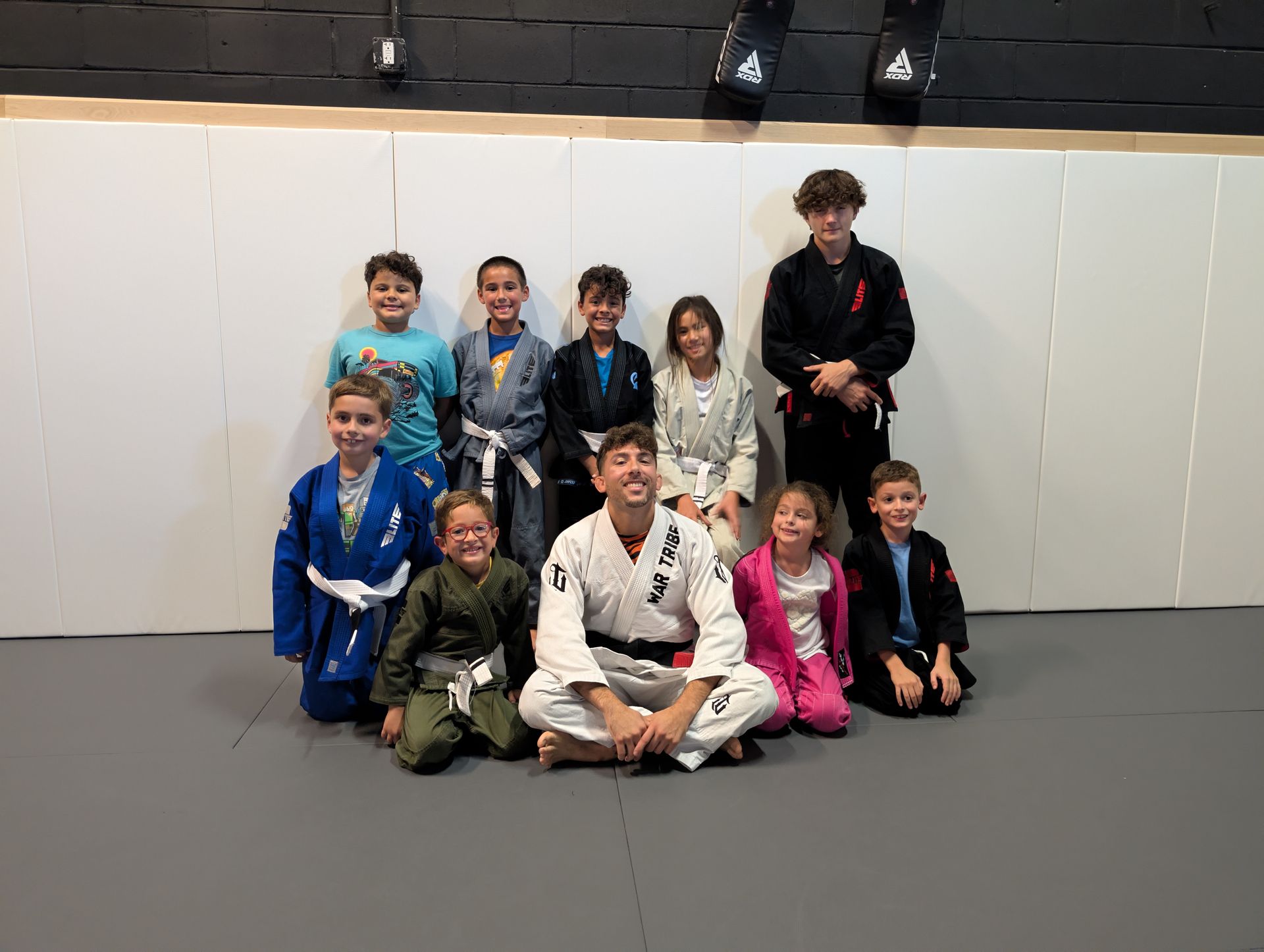
Jiu Jitsu gives teens a real place to practice confidence, composure, and responsibility, not just talk about it.
Teen years come with a strange mix of pressure and possibility. School gets more demanding, social dynamics get more complicated, and expectations rise fast. In the middle of all that, Jiu Jitsu can be a steady, practical way to build leadership skills that actually show up in real life, not just on a resume.
We see it every week: teens who start out quiet, unsure, or a little scattered gradually learn how to take direction, solve problems under pressure, and show up for other people. That matters in any setting, whether it is a classroom group project or a part-time job interview. And because Brazilian Jiu Jitsu is hands-on and honest, progress is clear. You either did the work or you did not, and that clarity is refreshing.
Brazilian Jiu Jitsu is also one of the fastest-growing combat sports in the United States right now, with hundreds of thousands of practitioners nationwide and millions worldwide. That growth is not just about competition. For teens especially, it is often about belonging, consistency, and having a place where effort is respected.
Why leadership looks different for teens
Leadership for teens is rarely about being the loudest person in the room. More often, it is about making good choices when nobody is clapping for you. It is staying calm when emotions spike. It is learning how to speak up without being disrespectful. It is knowing when to push and when to pause.
Our teen training environment gives your teen structured challenges and immediate feedback. On the mat, leadership starts with small habits: lining up on time, listening closely, drilling with focus, and taking responsibility for mistakes. Over time, those habits stack up and become real confidence.
In martial arts in Manalapan, NJ, families often look for programs that build discipline without turning everything into punishment. We agree. Teens do not need constant lectures. They need a consistent process that rewards effort, teaches accountability, and gives them room to grow.
The leadership lessons built into Brazilian Jiu Jitsu
Jiu Jitsu is physical, but the leadership training is mostly mental. A match or a sparring round is basically problem-solving in real time. Your teen has to notice patterns, make decisions quickly, and manage frustration without quitting.
A useful stat we hear echoed by many long-term students across the sport is that most practitioners feel training improves problem-solving off the mat. That makes sense. In Brazilian Jiu Jitsu in Manalapan, NJ, the same skills that help a teen escape a bad position also help your teen handle pressure at school: stay calm, assess options, choose a plan, adjust when it fails.
Composure under pressure
It is easy to look confident when everything is going your way. It is harder when you are tired, stuck, and someone is controlling your movement. Jiu Jitsu teaches a teen to breathe, think, and act anyway.
That composure shows up elsewhere. We often hear parents describe better emotional regulation at home, fewer blowups over small setbacks, and a more thoughtful approach to conflict. Not perfect, of course. Teens are still teens. But the trajectory changes.
Humility and coachability
One of the most underrated leadership traits is coachability. Leaders who cannot take feedback eventually stall out.
In training, feedback is constant. A technique needs a small adjustment. A grip is wrong. The timing is off. We build a culture where correction is normal and not personal. Teens learn that being corrected is not being attacked, it is being developed. That is a lesson that transfers cleanly into sports teams, academics, and jobs.
Responsibility to training partners
Jiu Jitsu is a contact sport, so safety and respect are non-negotiable. That means your teen learns to take care of training partners, control intensity, and communicate.
Leadership is not only about personal achievement. It is also about creating a good environment for the people around you. On the mat, that shows up as being a reliable partner, helping someone drill, and keeping a calm attitude when someone else is learning slowly.
How our teen classes are structured to build leaders
We do not just throw teens into random techniques and hope leadership happens. We structure classes so teens learn how to learn, and then learn how to lead.
A typical teen session includes technical instruction, drilling, and controlled sparring. The goal is steady skill-building with enough challenge to keep teens engaged. Consistency matters more than hype. We want your teen leaving class feeling worked, focused, and a little proud, in a grounded way.
Here is what we emphasize as the skills build.
• Clear expectations and routines that teach punctuality and follow-through
• Progressive technique learning so teens experience real mastery over time
• Partner work that requires communication, respect, and awareness
• Controlled sparring that teaches calm decision-making under stress
• Positive accountability where effort is praised, and excuses are not rewarded
That combination is where leadership grows. Not through speeches, but through reps.
Confidence that is earned, not borrowed
There is a big difference between hype-based confidence and earned confidence. Teens can sense it too. Earned confidence comes from doing hard things repeatedly and seeing improvement.
Jiu Jitsu is perfect for that because the feedback loop is immediate. A technique works or it does not. A position is controlled or it is not. That honesty can feel intense at first, but it is also why confidence becomes real. Your teen learns, “I can handle difficult moments, and I can get better.”
We also keep progress realistic. Some weeks your teen will feel unstoppable. Other weeks, not so much. That is part of growth. Leadership includes learning how to show up on the off days.
Social leadership and healthy communication
Teen leadership is social. It is how your teen treats others, how your teen handles awkwardness, and how your teen responds to peers under stress.
Partner drills naturally create small social challenges that help teens mature. Your teen has to introduce themselves, ask questions, accept feedback, and sometimes say, “Can we slow down?” That is a real communication skill, and honestly one that many adults still struggle with.
Over time, teens become more comfortable being seen as a beginner at something. That is huge. It takes courage to be new, to make mistakes, and to keep going anyway.
Competition, goals, and learning to lead yourself
Not every teen wants to compete, and that is fine. But goal-setting is still an important part of leadership development. We help teens set goals that match their personality and schedule, whether that is consistent attendance, improving conditioning, learning a specific guard pass, or eventually stepping into a competitive environment.
The sport itself has shifted over the years too. Nationally, many students now train for reasons beyond self-defense, including sport, fitness, and community. For teens, that can be a healthy shift. It turns training into a long-term craft, not a short burst of motivation.
If your teen is interested in competition, we treat it as a learning tool. Winning feels great. Losing is useful too, even if it stings. Competition teaches planning, nerves management, and the ability to perform under pressure. Those are leadership skills in a very real form.
What parents in Manalapan should look for in teen Jiu Jitsu
Parents usually ask practical questions first, and we appreciate that. You want to know whether your teen will be safe, whether the culture is positive, and whether the program actually helps beyond fitness.
Here are a few things that matter when evaluating any teen training experience.
1. A structured class plan that balances technique, drilling, and supervised sparring
2. A culture of respect where intensity is controlled and egos are managed quickly
3. A clear path for progress so teens stay motivated over months, not just weeks
4. Coaching that teaches discipline without humiliation or intimidation
5. Consistent scheduling options that fit school, sports, and family routines
If those boxes are checked, teens tend to thrive. They gain fitness, yes, but also self-management, confidence, and social maturity.
Leadership off the mat: school, work, and home
The real test of training is whether it shows up outside the gym. We design our teen program so the leadership habits built in Jiu Jitsu translate into daily life.
In school, that can look like better focus during homework, more resilience after a bad grade, and a calmer response to social stress. At work, it can look like a teen who takes feedback without getting defensive and shows up on time consistently. At home, it can look like fewer power struggles and more self-awareness.
None of this is magic, and it is not instant. But when teens train consistently, something shifts. They carry themselves differently. They speak a bit more clearly. They make eye contact more often. They start to believe they can handle hard things, because they have evidence.
Take the Next Step
If you want a teen program that builds real leadership skills, not just loud confidence, we can help you get started with a clear plan. At Lucky Cat Grappling Co., our teen Jiu Jitsu training is designed to develop capable students who can stay calm under pressure, work well with others, and keep improving even when it gets challenging.
You can explore the class schedule, see how the program is structured, and pick a path that fits your teen’s personality and goals. Lucky Cat Grappling Co. is here in Manalapan, and we would love to help your teen build something meaningful through consistent training.
Put these techniques into practice by joining a Jiu-Jitsu class at Lucky Cat Grappling Co.