
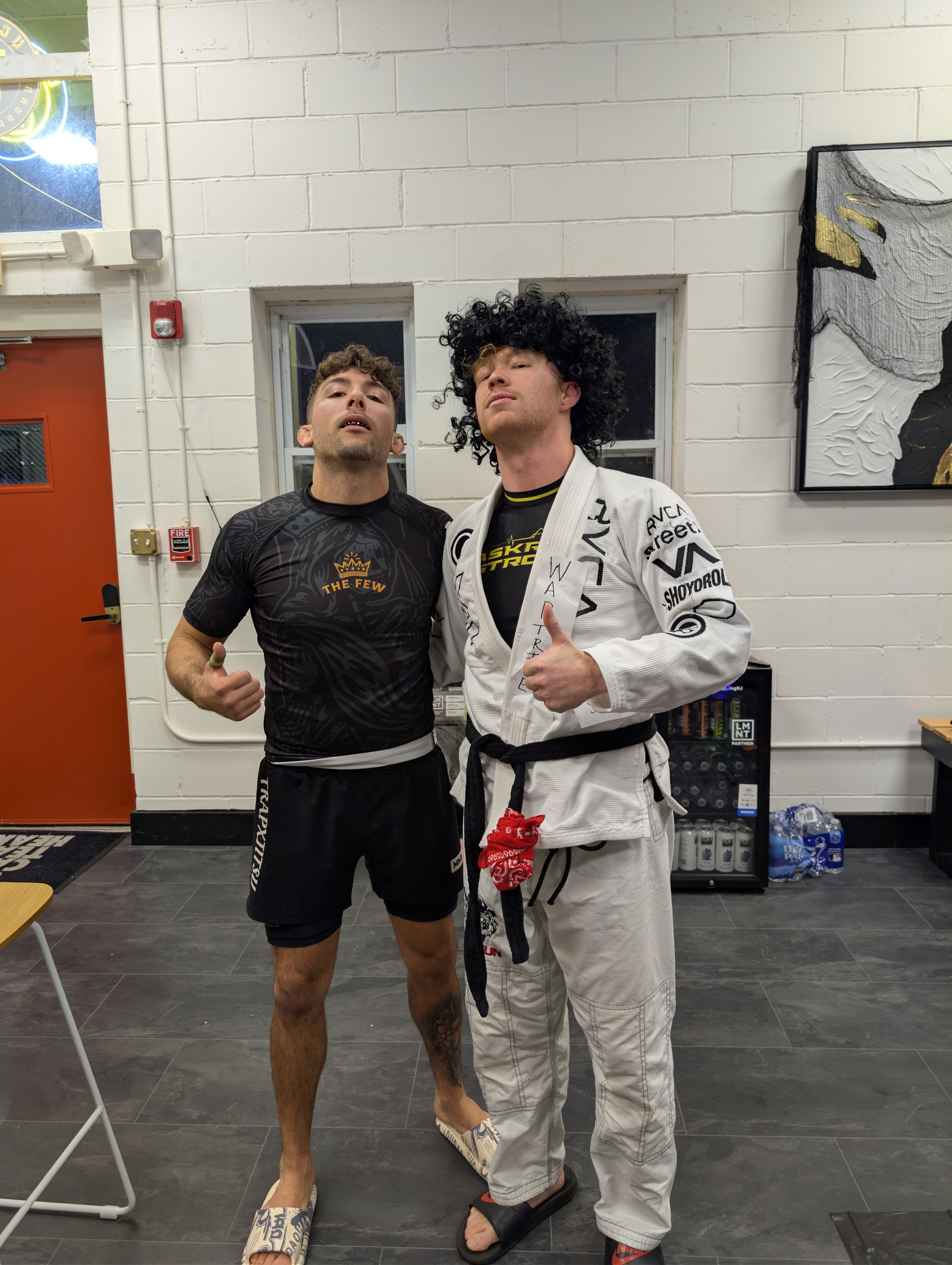
Jiu Jitsu has a way of pulling your attention into the present so completely that the rest of the day gets quieter.
Life in and around Manalapan moves fast, even when it looks calm from the outside. Work deadlines, commuting through Monmouth County, family schedules, and the constant ping of notifications can leave your brain feeling scattered. When your attention is split into ten tabs, focus becomes something you chase instead of something you have.
That is one reason we teach Jiu Jitsu the way we do. The training demands real-time decisions, body awareness, and problem-solving under pressure, but in a controlled environment where you can learn safely. The result is more than fitness. With consistent practice, you start noticing sharper concentration, steadier moods, and a more reliable ability to downshift from daily stress.
In this article, we will break down why Brazilian Jiu Jitsu works so well for focus and stress reduction, what you can expect when you are new, and how to use the class schedule to make training fit your week without turning it into another obligation.
Why focus is hard in daily life and why grappling changes that
Focus is not just willpower. It is a skill that depends on energy, sleep, stress levels, and how often you practice single-tasking. Most adults spend their day context switching: email to meeting to traffic to errands to dinner to doomscrolling. Even if you are productive, your attention gets fragmented.
On the mats, that fragmentation does not hold up. When someone is trying to control your posture, pass your guard, or set up a choke, you cannot half-pay attention. You have to feel balance, grips, pressure, timing, and angles all at once. That demand for full presence is one of the most practical mental benefits of Jiu Jitsu, because it trains you to lock onto what matters right now.
We also see something subtle happen for beginners: the mind stops negotiating. In daily life, you can procrastinate, overthink, and circle around decisions. In grappling, the feedback is immediate. If your base is off, you get moved. If your elbow flares, you get caught. That clarity can be oddly calming.
The “physical chess” effect and better decision-making under pressure
People often call Brazilian Jiu Jitsu “physical chess” for a reason. Every position has options, and every option has counters. You are not just using strength. You are solving problems with your body, one moment at a time.
That kind of problem-solving builds a specific type of focus: adaptive focus. Instead of trying to concentrate in a rigid way, you learn to stay aware and make decisions quickly when conditions change. Over time, that carries into everyday situations, like handling a tense conversation without escalating, or staying organized when your schedule gets messy.
Micro-decisions that train your brain
A single round of sparring can include dozens of small decisions, such as when to frame, when to shrimp, when to underhook, or when to slow down and recover. Those micro-decisions sharpen a few useful mental skills:
• Prioritizing: deciding what matters most in the moment, like protecting your neck before chasing a sweep
• Pattern recognition: noticing setups and sequences so you respond faster next time
• Emotional regulation: staying calm enough to think when you are uncomfortable
• Patience: accepting that progress is incremental and still showing up
It is not magic. It is reps. The same way lifting builds strength through consistent practice, Jiu Jitsu builds focus through repeated exposure to complex, real-time challenges.
How Jiu Jitsu reduces daily stress, session by session
Stress relief is often talked about like it only happens after a vacation or a major life change. Training does not work like that. One good class can shift your nervous system the same day.
There are a few reasons. First, physical exertion helps the body process stress hormones. Second, hard-but-safe training triggers endorphins and improves mood. Third, grappling creates a mental “flow state” where you are absorbed in the task and temporarily detached from the background noise of life.
A lot of adults tell us they come in with a mind racing and leave feeling like someone turned the volume down. That is the flow effect: your attention is fully anchored to breath, movement, and the immediate problem in front of you. It is mindfulness, but you do not have to sit still to find it.
Moving meditation that does not feel like meditation
Some people love silent meditation and journaling, and some people struggle with it. If sitting quietly makes your thoughts louder, training can be a more accessible version of mindfulness. You still practice presence, but it happens through movement and interaction.
You also get a kind of honest reset. If your day has been stressful, you do not have to “talk yourself out of it” for an hour. You show up, warm up, drill, and spar, and your body helps carry you into a different state.
The beginner experience: what to expect in your first weeks
Starting any martial art can feel intimidating, especially if your stress is already high. We keep the learning curve manageable by focusing on fundamentals, safety, and clear structure. You do not need to be in shape before you start. You get in shape by training.
In the first few weeks, you will learn basic positions and survival skills: how to move your hips, how to frame, how to keep safe posture, and how to tap early. You will also learn how to train with a partner respectfully, because the environment matters. When the room feels steady and supportive, it is easier to relax and learn.
Why tapping is a skill, not a defeat
If you are new, the idea of tapping can feel strange. In reality, tapping is how you train for years. It is communication and safety, and it teaches emotional flexibility. You learn to accept a bad position, reset, and try again without spiraling. That exact mindset is useful outside the academy too.
Stress inoculation: building resilience in a controlled setting
A big part of modern daily stress is the feeling of being overwhelmed without a clear outlet. Jiu Jitsu gives you a controlled version of pressure where you can practice staying calm. You feel your heart rate rise, you feel discomfort, and then you learn how to breathe, frame, and problem-solve instead of panic.
That is stress inoculation. You are not avoiding pressure. You are learning to function inside it, safely and progressively.
We structure training so you can build confidence without being thrown into chaos. Drilling gives you repetition. Positional sparring gives you focus. Live rounds give you application. Over time, that progression builds mental toughness without turning training into a grind.
Better sleep and a quieter mind at night
Stress often shows up at bedtime. You finally get still, and your brain starts replaying conversations and planning tomorrow. Regular training helps sleep in two ways: physical fatigue and nervous system regulation.
When you train consistently, your body has a reason to rest. Your muscles recover, your energy balances out, and your mind is less likely to stay stuck in anxious loops. Many students notice they fall asleep faster on training nights, and the sleep feels heavier in a good way.
Sleep is also where focus is built. If your sleep improves, your attention improves, and then you can handle stress better, which supports sleep again. It is a positive loop that starts with showing up.
How often should you train for focus and stress benefits?
You do not need to train every day to get value. Consistency matters more than intensity. For most adults with work and family responsibilities, two to three classes per week is a strong starting point for noticeable changes in mood, stress, and concentration.
If you train once a week, you still get the immediate stress relief and the community connection, but progress can feel slower. If you train four or more times per week, you will likely see faster technical improvement, but you will also want to pay attention to recovery, sleep, and nutrition so your body keeps up.
Here is a simple way we recommend thinking about it:
1. Choose two days per week you can protect, even when life gets busy
2. Use the class schedule page to pick times you can realistically make, not ideal times
3. Add a third class when your routine feels stable, not when you feel guilty
4. Keep your first month about learning and breathing, not “winning”
5. Reassess after four to six weeks based on energy, stress levels, and goals
That approach keeps training helpful instead of turning it into another source of pressure.
Focus outside the mats: everyday ways training carries over
The mental benefits of martial arts in Manalapan, NJ are not limited to the hour you are on the mat. The carryover is what makes it worth it. We want you to leave class feeling more capable in your real life, not just better at grappling.
A few common examples we hear and see:
• Work focus improves because you are used to staying with one task until it resolves
• Conversations feel easier because you practice calm breathing under tension
• Decision-making gets cleaner because you are used to choosing an option and committing
• Confidence rises because you have evidence you can learn hard things over time
This is also where Brazilian Jiu Jitsu in Manalapan, NJ fits into a busy suburban lifestyle. It is not an all-or-nothing identity. It is a weekly practice that keeps your mind sharper and your stress lower.
Community and routine: the underrated mental health benefits
Stress is not only chemical. It is social. Many adults feel isolated even when surrounded by people, because there are not many spaces where you can be challenged, supported, and seen consistently.
Training creates routine and connection. You show up, you learn names, you share effort, you laugh about the hard rounds, and you improve together. That sense of belonging matters. It makes it easier to keep going when motivation dips, and it adds a layer of stability that is hard to replicate with solo workouts.
We also keep progression clear. When you can track improvement, even small improvement, you feel more grounded. Your brain likes measurable progress. It reduces the feeling that everything is chaos.
Take the Next Step
Building better focus and lowering daily stress does not require a perfect schedule or a massive lifestyle overhaul. It takes a practice that reliably pulls you into the present, challenges you in a healthy way, and leaves you feeling reset. That is exactly what we aim to deliver on the mats.
If you are looking for Brazilian Jiu Jitsu in Manalapan, NJ with a structured learning environment and a supportive room culture, we would love to help you get started at Lucky Cat Grappling Co. You can use the website to explore the program, check the class schedule, and choose a pace that fits your life.
Train with intention and see real progress by joining a Jiu-Jitsu class at Lucky Cat Grappling Co.