
You do not need to be in shape to start, but you do need a plan that turns small wins into a stronger life.
If you are searching for Jiu Jitsu and you feel a little out of place in the fitness world, you are not alone. A lot of adults in Manalapan juggle long workdays, family schedules, and that quiet, creeping feeling that sitting has started to win. We built our training to meet you right there, because the best starting point is the one you can actually repeat next week.
What surprises most beginners is how quickly Brazilian Jiu Jitsu becomes more than a workout. Yes, you will sweat and get stronger, but you will also learn to stay calm under pressure, solve problems with your body and your brain, and show up with more confidence in regular life. Research even backs this up: longer training experience is linked with higher resilience, grit, self-efficacy, and self-control, and experienced practitioners report big improvements in mood, anxiety, and community connection.
This guide walks you through what “couch to combat ready” really means in our room, and how consistent training can spark personal growth without needing an extreme personality or a perfect body.
Why Jiu Jitsu Is a Personal Growth Engine, Not Just a Sport
Jiu Jitsu is built on a simple truth: you can learn to handle uncomfortable situations by practicing uncomfortable situations safely. That sounds obvious, but it is rare in everyday life. Most of us spend a lot of energy avoiding pressure. On the mat, we train inside it.
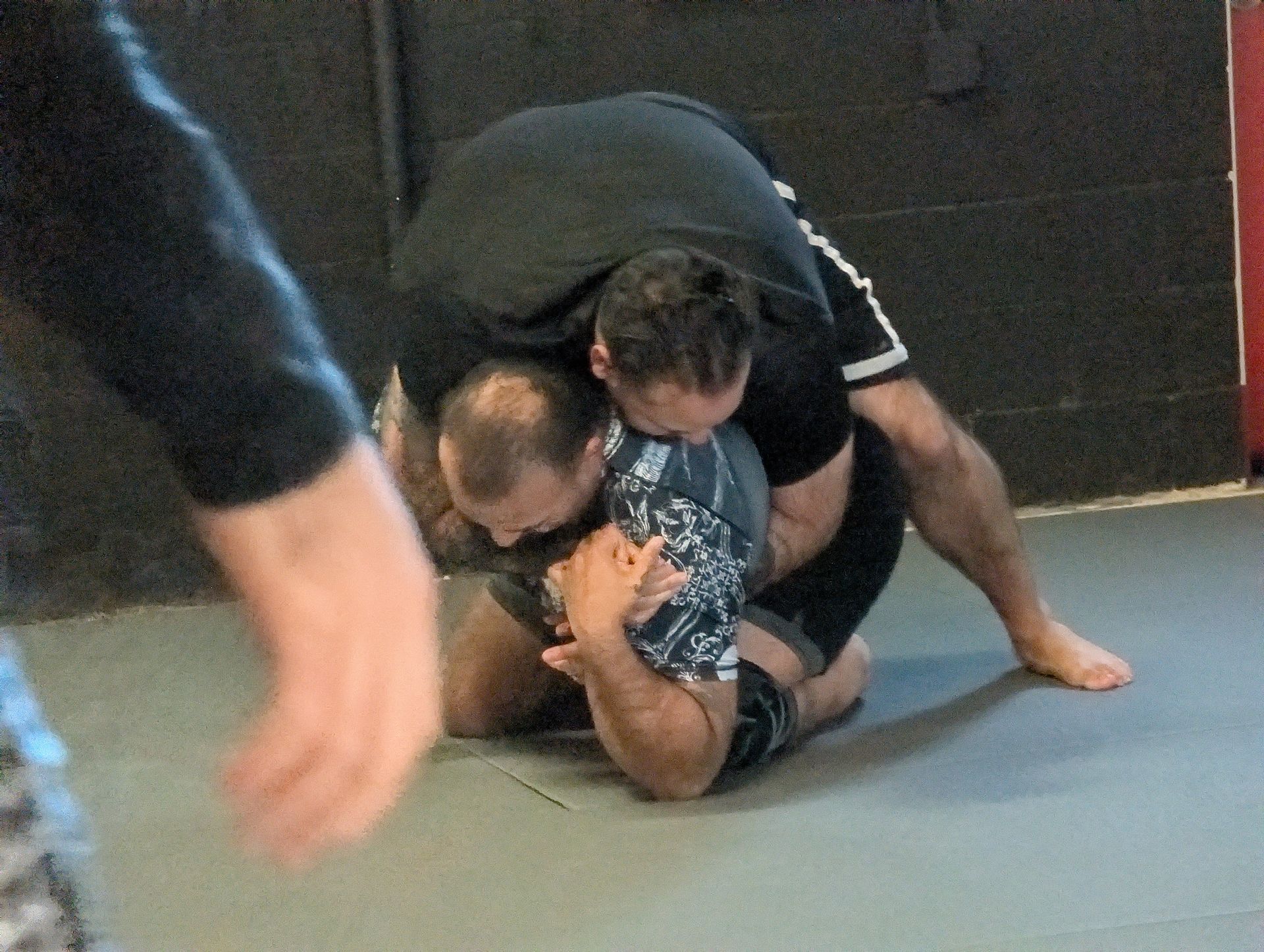
In class, you will practice positions where your breathing gets tight, your timing matters, and your choices have consequences. The goal is not to “tough it out.” The goal is to learn skills that create options. Over time, that changes how you see stress. Instead of panic, you start looking for frames, angles, escapes, and better decisions. That mindset transfer is real.
Studies on Brazilian Jiu Jitsu show that experienced practitioners tend to score higher in mental strength, resilience, grit, self-efficacy, and life satisfaction, with lower rates of certain mental health struggles compared to beginners. In surveys, practitioners also report reduced anxiety, improved confidence, better mood, and a strong sense of community. The mat gives you a repeatable process for growth: try, fail, adjust, repeat.
From Sedentary to Steady: What “Couch to Combat Ready” Looks Like
A beginner does not need explosive cardio or a gymnast’s flexibility. Most new students start with tight hips, stiff shoulders, and a nervous laugh when we talk about sparring. That is normal.
“Combat ready” does not mean you are looking for fights. It means you move with balance, you can protect yourself, and you can keep thinking when something gets intense. The path there is gradual. Our job is to keep it structured so you do not get lost or overwhelmed.
Early on, we focus on fundamentals that help you feel safe and capable fast:
- How to breathe and brace so pressure does not spike your heart rate
- How to stand, base, and fall safely so you feel more athletic right away
- How to use leverage so strength is helpful, but not required
- How to tap early and train smart so learning stays the priority
This is one reason martial arts in Manalapan, NJ can feel so different when it is done well. The environment matters. When the room is supportive and the training is progressive, you can start from “I have not worked out in years” and still build momentum.
The Hidden Mental Skills You Train Every Time You Roll
The physical techniques are obvious: escapes, holds, control, and submissions. The mental skills are quieter, and they may be the bigger reason people stay.
Resilience that is practiced, not preached
Resilience is not a motivational quote. It is a trained response. In Jiu Jitsu, you spend a lot of time in imperfect positions, and you learn that “not ideal” is not the same as “over.” That lesson is strangely comforting off the mats.
Self-efficacy: the belief that you can figure it out
One of the strongest changes we see is how quickly beginners start solving problems. You try an escape, it fails, you adjust your angle, and suddenly you are out. Those moments stack. Research connects training experience with higher self-efficacy, and it makes sense: you earn proof through repetition.
Self-control under pressure
Rolling can feel intense even when it is friendly. You learn to control breathing, pace, and emotional reactions. That self-control is useful everywhere: meetings, parenting, tough conversations, even traffic on Route 9.
Mental flexibility
You cannot force Jiu Jitsu to work. You have to adapt. People report improved mental flexibility with training, and we see it in how students stop freezing and start experimenting. Instead of one “right” answer, you learn to flow between options.
The Physical Payoff: A Full-Body Workout With Practical Benefits
Brazilian Jiu Jitsu is honest work. It builds strength, stamina, and cardiovascular conditioning without needing machines or a complicated routine. You are pushing, pulling, bridging, rotating, and stabilizing through real ranges of motion.
Some of the most common physical improvements we see include:
- Better cardiovascular health and endurance from repeated rounds and steady movement
- Stronger core and posterior chain from bridging, framing, and positional control
- Improved mobility and flexibility from grappling-specific movement patterns
- Weight management support from consistent, high-effort training sessions
- More body awareness and coordination, which helps you move better in general
If you are starting from a sedentary lifestyle, the biggest win is consistency. Jiu Jitsu makes it easier to show up because there is always something to learn. It is not just “do more reps.” It is “solve this puzzle,” and your body adapts along the way.
What to Expect in Your First Month (So You Do Not Overthink It)
The first few weeks are about learning the language of the mat. You will hear words like guard, mount, side control, and closed guard, and at first they can blur together. That is fine. Your job is to keep showing up.
Here is a realistic, beginner-friendly progression we recommend:
1. Train 2 to 3 classes per week to build familiarity and steady conditioning
2. Learn two or three core escapes early, because escaping builds confidence fast
3. Focus on survival and positioning before submissions, since control comes first
4. Start light sparring when you are ready, with clear guidelines and safe partners
5. Track small wins, like breathing better under pressure or remembering a grip
Most people notice changes in energy, mood, and confidence within weeks. Bigger shifts in resilience and grit build over months, especially when training becomes part of your routine.
Confidence Without Ego: Why the Belt System Works in Real Life
Belts matter, but not because of status. The belt system gives you a long-term map. It breaks a huge skill set into milestones, and it teaches patience.
In daily life, we often want instant results. In Jiu Jitsu, progress is obvious but earned. You cannot rush it, and that is a gift. You learn how to commit, how to stay humble, and how to trust a process even when you have an off week.
Research comparing beginners and advanced practitioners suggests that higher ranks are associated with stronger mental traits like resilience and life satisfaction. The timeline is measured in years, and that is exactly why it creates depth. You learn how to keep going.
Community Is Not a Side Benefit, It Is the Glue
One reason people stick with Brazilian Jiu Jitsu in Manalapan, NJ is community. You cannot train alone forever. You need partners who help you learn, challenge you, and keep you accountable.
In surveys, practitioners report an extremely strong sense of community. We get it. When you drill with someone, you are cooperating. When you roll, you are testing yourself, but still protecting each other. It creates trust quickly, in a way that is hard to replicate elsewhere.
This matters for adults who feel isolated, for parents who want a positive environment, and for anyone who is trying to rebuild a healthier routine. It is easier to stay consistent when people notice when you are there and when you are not.
Family-Friendly Progress: Kids, Teens, and Parents on the Same Mat Culture
Jiu Jitsu can work well for families because it teaches behavior as much as technique. Kids learn how to listen, how to stay focused, and how to be coachable. Teens get an outlet that rewards discipline and effort. Parents get a training option that improves fitness and stress management, and it is honestly satisfying to share a common language with your child.
Our culture emphasizes safety, respect, and structured learning. That makes martial arts in Manalapan, NJ feel less like chaos and more like a place where growth is expected. If your goal is confidence for your child, or a healthier routine for your household, the mat can become a steady anchor in a busy week.
Stress Relief That Is Actually Skill-Building
A lot of fitness options reduce stress because you are tired afterward. Jiu Jitsu reduces stress because you learn to handle pressure while you are in it. That is a different kind of relief.
You practice breathing through intensity. You practice staying calm when you are pinned. You practice making decisions when your muscles are fatigued. Over time, daily stress feels more manageable because your nervous system has a new reference point.
This is also why high-stress groups like veterans and first responders often benefit from training. The structure, the community, and the physical challenge can support mood, self-esteem, and healthier stress responses. We keep training progressive and respectful of different starting points, including people returning from injury or rebuilding fitness.
Train Smarter: A Few Practical Tips to Stay Consistent
Progress comes from doing the basics well, not from trying to win practice. If you want the fastest path from couch to combat ready, keep it simple.
• Show up even when you feel “off,” and just aim for a solid, safe session
• Tap early and often, because learning is the goal and safety keeps you training
• Ask one question after class, not ten, and then drill the answer next time
• Sleep and hydration matter more than most beginners expect
• Track progress by consistency and calmness, not by how many taps you get
If you do this for a few months, you will move differently, think differently, and handle pressure differently. That is personal growth you can feel.
## Ready to Begin at Lucky Cat Grappling Co.
If you want Jiu Jitsu to improve your fitness, confidence, and resilience, we make the path clear and beginner-friendly at Lucky Cat Grappling Co. Our programs are designed to take you from “I have been sitting too much” to “I can handle hard things,” one class at a time, without pretending it is effortless.
When you train with us in Manalapan, you are not just learning techniques. You are building a habit of showing up, staying calm, and improving on purpose. That is the real transformation, and it tends to spill into the rest of your life in the best way.
Move from reading to training by joining a Jiu-Jitsu class at Lucky Cat Grappling Co. today.