
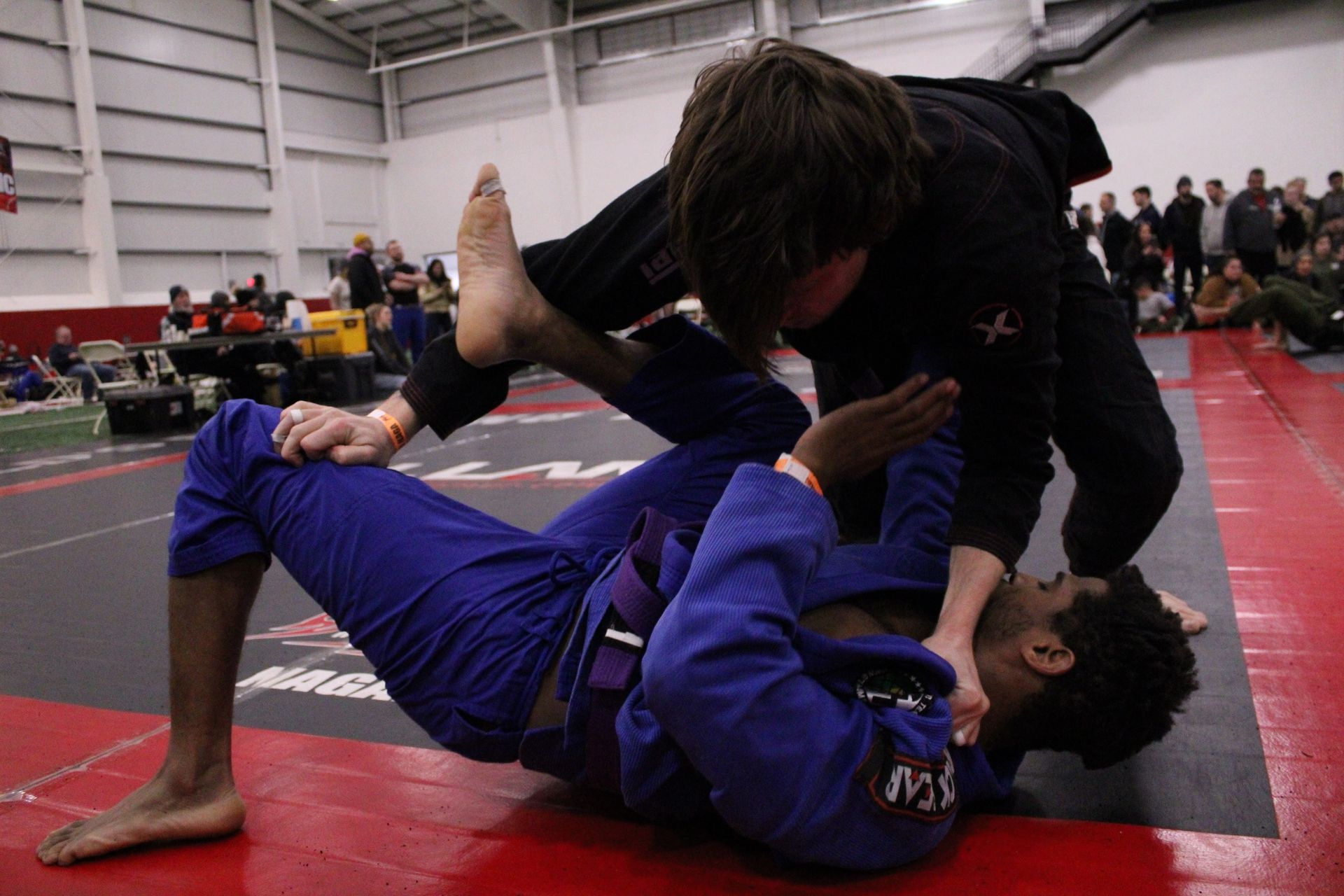
Move better in a few weeks by training the exact ranges that show up in guard, scrambles, and escapes.
Flexibility and mobility sound like “extra credit” until you’re stuck in a tight half guard, your hips won’t rotate, and your spine feels like it’s made of plywood. In Jiu Jitsu, better movement is often the difference between forcing a technique and flowing into it.
In our Brazilian Jiu Jitsu classes, we see the same pattern: students who build mobility on purpose improve faster, feel safer in training, and waste less energy. The good news is you don’t need an hour-long stretching routine to get results. You need the right drills, done consistently, and matched to what your body actually does on the mats.
This guide lays out our favorite drills for faster hip, spine, shoulder, and ankle improvements, plus simple ways to plug them into your week if you train martial arts in Manalapan, NJ and want progress you can feel.
Why mobility matters in Jiu Jitsu (and why “flexible” is not the same as “mobile”)
Flexibility is passive range, like how far you can sink into a stretch when everything is relaxed. Mobility is active range, meaning you can control that position under tension, while breathing, framing, and moving. On the mat, you almost always need the second one.
When you can actively rotate your hips, you keep your knees safe in guard retention and you angle your body for attacks without yanking on your joints. When your thoracic spine rotates smoothly, your underhooks and sit-ups feel crisp instead of jammed. When your shoulders and wrists move well, grips last longer and you’re less likely to get irritated elbows from compensating.
We also like mobility work because it’s a fast feedback loop. If you do a drill for two minutes and your squat feels deeper or your guard feels lighter, that’s a real win you can measure.
The fastest way to improve: train the positions you keep losing
We keep mobility specific. If your guard gets passed because you can’t bring your knee to your chest, we don’t just “stretch hamstrings.” We teach you to own hip flexion and external rotation while your core stays engaged. If your back rounds and you get flattened, we don’t just “do yoga.” We build spinal segmentation and thoracic rotation so your frames and hip escapes have options.
Think of mobility as skill practice, not punishment. Small sessions, done often, beat heroic sessions you never repeat.
Hip mobility drills for guard retention and smooth pivots
Hips are the engine for most of Jiu Jitsu. They help you shrimp, invert safely, recover guard, and create the angle for triangles and armbars without muscling your way through. If your hips feel tight, start here.
90 90 switches with controlled breathing
Sit in the 90 90 position with both knees bent, one leg in front and one to the side. Keep your chest tall and rotate your knees side to side without using your hands if possible.
Go slow and treat it like technique reps. Exhale as you rotate and try to keep your feet quiet. You’ll feel the work in deep hip rotators, not just “stretch pain.”
Frog stretch with light contractions
Set up on elbows and knees with knees wide. Sink back gently until you feel the inner thigh stretch. Then do small, gentle contractions: press your knees into the mat for about 10 to 15 seconds, relax, and sink a bit deeper.
This is one of our go-to drills for groin flexibility that supports wide-knee open guard positions. Keep it mild. If you crank it, your body will tighten up and you’ll lose the point.
Shin box get-ups
Start in shin box, then stand up using as little hand support as you can, and sit back down under control. This builds active hip rotation plus the ability to transition, which is exactly what happens when you’re pummeling legs and trying to sit into a new guard.
If standing is tough at first, use your hands, but aim to “need them less” over a few weeks.
Spine and thoracic mobility drills for escapes, frames, and posture
A stiff upper back makes your guard feel flat and your frames feel weak. A stiff lower back usually means your hips are doing the wrong job. We train the spine to move segment by segment so you can create space without overloading your neck.
Cat cow with pauses
Cat cow is simple, but we treat it like precision work. Move slowly and pause at the end range for a full breath. Try to initiate the motion from different parts of the spine, not just the shoulders.
This helps with the “round and extend” patterns you use in shrimping, granby-style movement, and posture changes inside guard.
Open book thoracic rotations
Lie on your side with knees bent, arms stacked. Rotate your top arm open toward the floor behind you while keeping knees together. Move on your breath, not your ego.
We like this because it improves rotation without forcing the lower back. You’ll notice it in sit-ups, underhook battles, and turning the corner during passes.
Seated spine waves
Sit tall, hands on knees, and gently roll your pelvis forward and back, then add small waves up the spine. It feels a little odd at first, but it teaches control.
If you’re used to being “stiff strong,” this drill reminds your body that strength and motion can coexist, which is the whole point.
Shoulder and wrist mobility for safer grips and stronger frames
In Jiu Jitsu, shoulders and wrists take a lot of quiet stress. Gripping, framing, posting, and hand fighting all live there. We don’t chase extreme flexibility. We chase resilient, controlled range.
Shoulder CARs
Stand tall and slowly circle your arm through its biggest pain-free range, like drawing a slow, controlled circle with your elbow. Keep ribs down and avoid twisting your torso.
Two or three reps per side done well can do more than a messy set of twenty. This is joint control training, not cardio.
Thread the needle
From hands and knees, slide one arm under your body and rotate until your shoulder and side of your head rest lightly on the mat. Breathe into the upper back.
This is a practical drill for people who feel “stuck” in the shoulder blades. It also complements the framing positions where your shoulders need to protract and retract smoothly.
Wrist rocks and palm lifts
On all fours, turn fingers forward, then gently rock forward and back to load the wrists. Next, keep the palm down and lift the fingers if you can, then reverse: fingertips down, palm lifted. Go easy.
Wrist mobility helps you post safely and tolerate grips longer, especially if you train often.
Ankles, knees, and feet: the underrated mobility that improves your base
A lot of students focus on hips and shoulders, but ankles and feet matter for balance, passing pressure, and getting up off the mat without feeling like you’re 90 years old.
Kneeling ankle dorsiflexion rocks
Half-kneel with one foot forward. Keep heel down and drive knee forward over the toes, then return. Don’t let the arch collapse.
Better ankle dorsiflexion helps your squat, your base, and your ability to drive forward in passes without your heel popping up and throwing you off balance.
Toe extension sit-backs
From kneeling, tuck toes under and sit back toward your heels. Start with hands on the mat for support and breathe.
This one is spicy for many people, but it pays off if your feet cramp during long rounds or if your toes feel rigid when you try to build a stable base.
Cossack squats to a box or pad
Shift side to side into a lateral squat while the other leg stays straighter. Use a pad or low box if depth is limited.
Lateral strength and mobility show up in passing, sprawling, and recovering guard. It’s also a nice way to balance the “always forward” motion many of us default to.
A simple weekly mobility plan we actually see people stick with
If you want faster results, consistency beats complexity. We recommend attaching mobility to training so it becomes automatic. Here’s a clean way to do it without overthinking.
1. Before class, pick two drills and do 60 to 90 seconds each to warm the exact area you’ll use
2. After class, do one longer drill for 2 to 4 minutes while your body is already warm
3. On two non-training days, do a 10-minute session focused on hips and thoracic rotation
4. Once a week, retest one position you care about, like deep squat hold or 90 90 comfort
5. Keep notes simple: tight side, pain-free range, and one small win you noticed on the mat
This structure works well for Brazilian Jiu Jitsu in Manalapan, NJ because many students train around busy schedules. Short, repeatable sessions fit real life.
Common mistakes that slow down progress (and how we coach around them)
The most common mistake is treating mobility like a contest. If you force end range, your nervous system often tightens to protect you, and you walk away feeling “stretched” but not improved.
Another issue is skipping strength in new ranges. Passive stretching alone can help, but if you can’t control that range, it won’t show up during live rounds. That’s why we like controlled transitions like shin box get-ups and Cossack variations.
Finally, people forget to breathe. It sounds basic, but breath is how you signal safety. Smooth nasal inhales and slow exhales usually create better range than brute force, especially around hips and ribs.
How mobility shows up in real training results
When mobility improves, your technique choices expand. You don’t have to abandon your game, you just gain options. Students often notice they can recover guard with less panic, they can turn their hips for angles without yanking on the knee, and they can maintain posture longer because the spine and shoulders aren’t fighting the position.
Over time, better movement also makes training more enjoyable. You spend less time feeling “stuck in your body” and more time actually learning. That’s a big deal if your goal is to keep training martial arts in Manalapan, NJ for years, not weeks.
Ready to Train Smarter in Manalapan
If you want mobility that transfers directly to your rolls, we build it into how we coach, warm up, and troubleshoot positions at Lucky Cat Grappling Co. The goal is not to turn you into a gymnast, it’s to help you move with control, protect your joints, and make your Jiu Jitsu feel cleaner fast.
When you’re ready, we can help you match drills to your current game and your current limitations, whether you’re new, returning after time off, or training hard and trying to stay durable at Lucky Cat Grappling Co.
Ready to train? Join a Jiu-Jitsu class at Lucky Cat Grappling Co. today.