
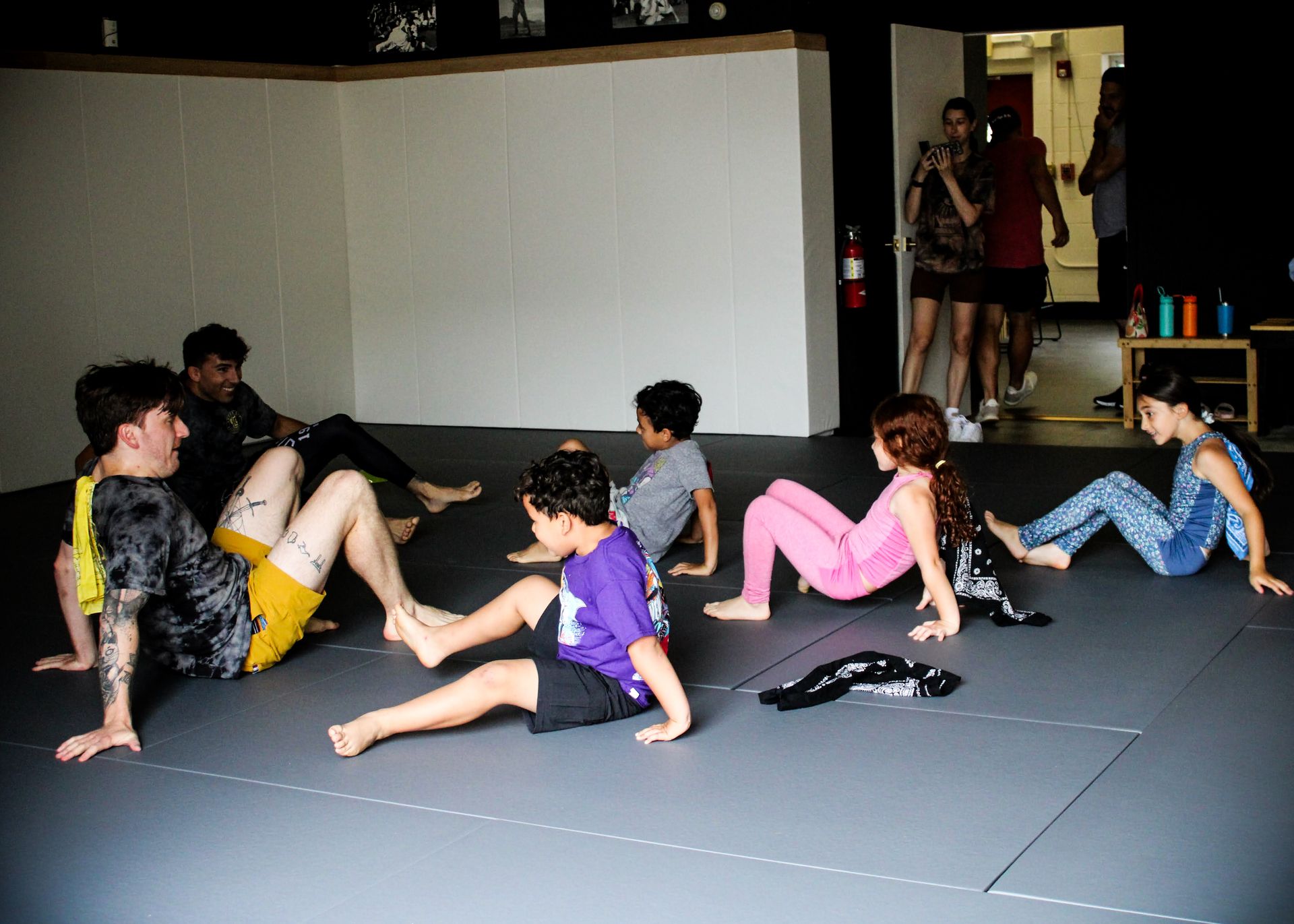
Jiu-Jitsu gives you a practical way to get stronger, move better, and stay calm under pressure, one class at a time.
Jiu Jitsu has quietly become one of the most effective ways to build real fitness without living on a treadmill, and the momentum is hard to ignore. Search interest has risen more than 100 percent since 2004, and roughly 750,000 people in the U.S. now train in Brazilian Jiu-Jitsu. That growth matters in a place like Manalapan, where busy schedules, family life, and work stress can make consistent training feel like a puzzle.
Our goal is to make that puzzle easier to solve. We coach you through a clear, progressive path that builds skill and conditioning together, so you do not have to choose between “getting in shape” and “learning something useful.” You show up, we guide you, and you leave feeling like you did something that actually counts.
If you are looking for Brazilian Jiu Jitsu in Manalapan, NJ, you are probably also looking for a training environment that feels welcoming, structured, and honest about what it takes. We take that seriously. We want you to train for years, not weeks, and that means smart coaching, a strong fundamentals focus, and a culture where people look out for each other.
Why Jiu Jitsu is exploding, and why Manalapan is a great place to start
Brazilian Jiu-Jitsu is often called the fastest-growing combat sport in America, and the data backs it up. While interest in arts like Karate and Taekwondo has declined over the last two decades, BJJ has surged. The global market is projected to grow from about 1.2 billion in 2025 to 2.5 billion by 2033, fueled by fitness adoption, tournaments, and youth programs.
In Manalapan, that trend fits the way people actually live. We are close to major hubs like Freehold and East Brunswick, but we still value convenience and community. You want training that is accessible, consistent, and close enough that you can keep showing up even when life gets busy.
There is another reason this works well locally: grappling is a practical complement to modern fitness goals. Many people want strength, mobility, and conditioning without constant high-impact striking. Jiu Jitsu lets you train hard while still being mindful about longevity, especially when your coaching prioritizes progressive intensity and good habits.
What makes Jiu Jitsu a different kind of fitness
If you have tried standard workout plans, you already know the problem: motivation fades when training feels repetitive. Jiu Jitsu stays engaging because every class has a skill component, a problem-solving component, and a physical component. Even when you are tired, your brain is still working, and that is a big part of why people stick with it.
Physically, you develop usable strength and endurance through movement patterns that show up everywhere: getting up from the floor, stabilizing your core under pressure, controlling your breathing, and learning how to move your hips and shoulders smoothly. We also see big improvements in balance and coordination, especially for adults who have spent years sitting at desks or commuting.
Mentally, you get a training space where stress turns into focus. You learn how to stay calm in uncomfortable positions, how to keep making decisions when you are fatigued, and how to reset after mistakes. That is where the “inner strength” piece becomes real, not motivational-poster real, but the kind you notice when your week is chaotic and you still feel grounded.
Your first month: what beginners in Manalapan can realistically expect
Starting something new can feel awkward, and Jiu Jitsu is no exception. There is vocabulary, etiquette, and a lot of unfamiliar movement. We keep the early experience simple: show you the safest ways to move, teach you foundational positions, and help you understand the purpose of each drill.
In your first few weeks, you will likely learn how to fall safely, how to maintain posture and base, and how to escape common pin positions. You will also start to feel the unique “cardio” of grappling: bursts of effort followed by controlled breathing and technique. It can be humbling, but it is also oddly satisfying because progress shows up quickly when you train consistently.
A realistic timeline for many students is 6 to 12 months to feel comfortable with blue-belt-level basics, depending on attendance and focus. We help you build those basics with repetition that does not feel mindless. The goal is not to collect moves, it is to build a game you can actually use.
The core skills we build, and why fundamentals never stop mattering
The temptation in Jiu Jitsu is to chase flashy techniques. The truth is that long-term improvement comes from boring-sounding skills done extremely well. We structure training around fundamentals that keep paying dividends no matter how advanced you become.
Here are a few foundations we emphasize because they shape everything else:
• Positional awareness and escapes, so you can stay safe and keep training with confidence
• Pressure, posture, and base, which make your offense more effective and your defense more reliable
• Guard retention and passing concepts, so you can control distance and dictate where the fight happens
• Submissions and finishing mechanics that prioritize control first, especially for newer students
• Breathing and pacing, so you learn to conserve energy and stay composed under fatigue
When your fundamentals are solid, you can train with a wider range of partners and still feel in control of your pace. That is especially important for adults who want fitness and skill without feeling like every round is chaos.
Gi and no-gi: which one should you train in?
We coach both gi and no-gi because each format teaches you something valuable. The gi slows the game down and makes grips matter, which helps you understand leverage, posture, and control. No-gi speeds things up and rewards clean movement, strong connection, and wrestling-style transitions.
Interestingly, even in elite no-gi competition, gi backgrounds still show up among champions, and the fundamentals carry over. At ADCC 2024, chokes made up about 65 percent of submissions, arm attacks around 20 percent, and heel hooks were relatively rare. That tells you something: control and high-percentage finishing mechanics still win, even when rule sets and trends shift.
If you are unsure where to start, we typically recommend beginning with fundamentals and letting your schedule guide you. The best choice is the one you can train consistently. Over time, blending both helps you become well-rounded and more adaptable.
Injury risk and how we keep training sustainable
We will be straightforward: Brazilian Jiu-Jitsu has real injury risk. A 2019 study found about 59 percent of athletes reported at least one injury in the prior six months, and risk increases with higher training frequency and intensity. That is not meant to scare you off, it is meant to set the expectation that smart training habits matter.
Our approach to longevity is built into the way we run class. We emphasize warm-ups that prepare joints and tissues, technical progressions that match your experience level, and partner work that stays controlled. We also coach you to tap early, communicate clearly, and choose appropriate intensity based on your goals for the day.
A few practical habits we encourage right away:
1. Arrive a little early so your body is warm before hard movement starts
2. Prioritize clean technique over winning scrambles, especially as a beginner
3. Tap early to joint locks and to chokes once the position is secured
4. Rotate partners thoughtfully and speak up if a pace feels unsafe
5. Train 2 to 3 times per week at first so your body can adapt steadily
When your goal is lasting fitness, consistency matters more than heroic sessions. We would rather see you train three days a week for years than seven days a week for a month.
Training for busy adults: building a schedule you can actually keep
Most adults in Manalapan are juggling responsibilities. That is normal. The key is choosing a routine that supports your life instead of fighting it. We recommend starting with 2 to 3 sessions per week, tracking how you feel, and adjusting gradually.
You will notice that Jiu Jitsu conditioning is different from standard gym fatigue. Your grip, neck, and core often feel worked in new ways. Sleep and hydration matter, and so does recovery. If you are lifting weights, running, or doing high-intensity workouts, we help you balance those activities so your training stays productive.
What we want for you is a steady rhythm: show up, learn, sweat, and leave with enough energy to be a good parent, partner, or professional afterward. You do not need to train like a full-time competitor to get real results.
Kids and teens: confidence, coordination, and calm focus
Youth programs have grown rapidly in North America, and for good reason. Kids benefit from structured challenge: learning how to listen, practice, problem-solve, and handle setbacks without melting down. In Jiu Jitsu, that happens naturally because every drill has feedback and every position teaches patience.
We coach kids and teens with safety, clarity, and age-appropriate intensity. The goal is not to turn childhood into boot camp. The goal is to build coordination, body awareness, and self-confidence, while also teaching respect for training partners. Over time, students learn that progress comes from consistency, not from being the biggest or loudest person in the room.
For families in Manalapan looking for martial arts in Manalapan, NJ that feels practical and structured, grappling is a strong fit. It is hands-on, but it is also deeply skill-based, and that combination can be a great outlet for youthful energy.
From hobbyist to competitor: a clear path if you want it
Not everyone wants to compete, and that is completely fine. But if you do, we build the fundamentals that competition demands. Modern tournaments reward athletes who can control positions, finish efficiently, and dictate the pace. Takedowns have become increasingly important at high levels, and wrestling-style entries show up frequently in elite events.
We prepare you with a staged approach: technical foundation first, then controlled live training, then more specific rounds that simulate match scenarios. We also help you understand rule sets, scoring, and strategy so competition feels like an extension of training, not a random adrenaline spike.
Even if you never compete, training with that level of structure improves your Jiu Jitsu quickly. You learn to set goals, track progress, and handle pressure in a healthy way.
Take the Next Step
If you want Jiu Jitsu to become a lasting part of your life in Manalapan, the right start matters. At Lucky Cat Grappling Co., we keep the path simple: fundamentals first, smart intensity, and coaching that helps you feel progress without feeling overwhelmed.
Whether you are here for fitness, stress relief, self-defense, or a competitive outlet, our classes are built to meet you where you are and help you move forward with purpose. When you are ready, we would love to welcome you onto the mats at Lucky Cat Grappling Co. and help you build strength that lasts.
New to Jiu-Jitsu? Start your journey by joining a class at Lucky Cat Grappling Co.