
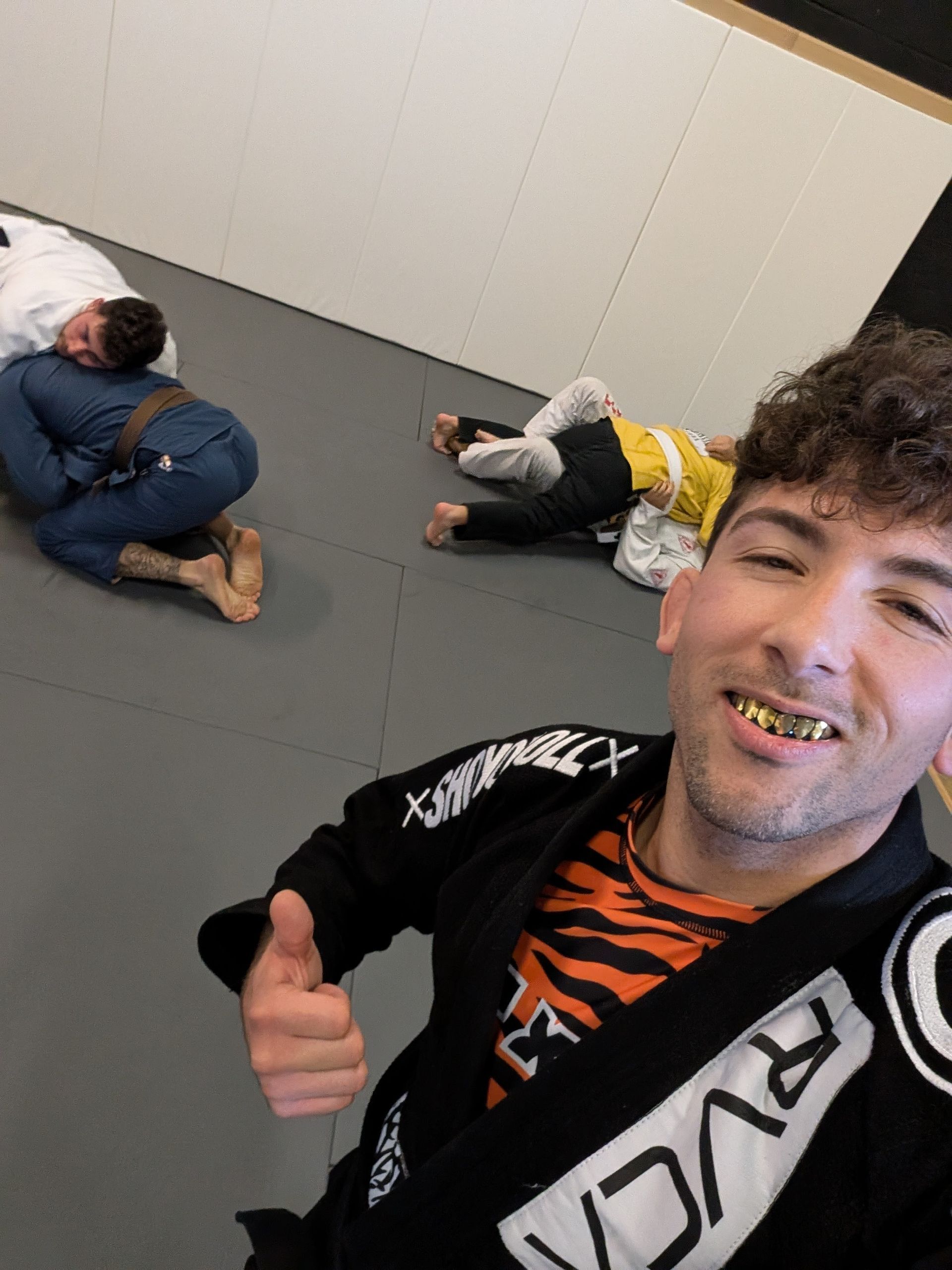
Jiu Jitsu turns split-second decisions into a skill you can practice, measure, and bring back into daily life.
When most people think about Jiu Jitsu, they picture the physical side: movement, leverage, and learning how to stay calm in uncomfortable positions. What often gets overlooked is the mental training happening at the same time. Every round is a real-time puzzle, and your brain is forced to pay attention, adapt, and make choices under pressure.
In our classes here in Manalapan, we see it every week: students start showing up with better focus, more patience, and a clearer sense of how to solve problems without spiraling. That might sound like a big claim, but the structure of Jiu Jitsu naturally demands it. You cannot mentally drift and still improve.
If you are looking for martial arts in Manalapan, NJ that build more than fitness, this is where Jiu Jitsu stands out. It is a thinking person’s art, even when you are sweating through the basics.
Why Jiu Jitsu trains your attention like a muscle
Focus is not just motivation. It is a skill, and like any skill, it grows through repetition. In Jiu Jitsu, you repeat the same patterns with small variations: grips change, angles shift, timing tightens. Your attention has to lock onto what matters, because missing one detail often means you end up pinned or swept.
That is why training feels different from a normal workout. In many fitness routines, you can zone out and still finish the set. On the mats, zoning out is obvious. Your partner gives immediate feedback, and the feedback is honest.
Research on Brazilian Jiu Jitsu and related grappling training points in the same direction: complex movement paired with decision-making improves executive function, including attention and self-regulation. In plain terms, your brain practices staying on-task even when you are tired, frustrated, or under stress.
The “attention anchors” we coach in class
When newer students struggle with focus, it is usually not because they are incapable. It is because everything is new at once. We break the noise down into anchors you can return to:
• Breathing rhythm: steady breathing keeps the mind from racing and helps you think clearly
• Posture and frames: simple body structure cues keep you from collapsing mentally and physically
• One goal per exchange: pass the guard, recover guard, improve position, or escape
• Timing over strength: noticing when to move is a focus skill, not a toughness contest
• Reset moments: learning to pause, re-grip, and re-center without panicking
Over time, you stop chasing every possibility and start seeing what matters first. That is focus with teeth.
Problem-solving under pressure: the real curriculum you do not see on the wall
Jiu Jitsu is essentially applied problem-solving. You start with a problem, you test a solution, you get immediate results, and you adjust. It is a feedback loop that rewards curiosity and punishes stubbornness, in a good way.
If you have a high-pressure job, a busy household, or a brain that likes to run ahead of you, that feedback loop is valuable. You practice staying present with the problem in front of you, not the imaginary one coming next.
In Brazilian Jiu Jitsu in Manalapan, NJ, the best breakthroughs often happen when you stop forcing and start experimenting. You try a guard pass and it fails. Instead of treating that as a loss, you treat it as data. That mindset carries over into everyday challenges: meetings, deadlines, parenting moments, tough conversations.
A common example we see
A student gets stuck under side control and keeps trying the same big bridge escape. It burns energy and fails. We coach a smaller sequence: frame, hip escape, recover guard, stabilize. Suddenly the “problem” becomes manageable.
That is not just an escape. It is a lesson in breaking a stressful situation into steps and executing them calmly.
The science behind clearer thinking and better stress control
We do not need to overcomplicate this. Hard training changes the brain and body. Grappling adds a layer of cognitive demand that many activities do not: strategy, prediction, and adaptation against a resisting partner.
Studies and current trends from 2019 to 2024 connect grappling and BJJ-style training with improvements in mental resilience, stress tolerance, and overall wellbeing. More experienced practitioners often show higher self-control, grit, and self-efficacy than beginners, and the gap tends to widen with consistent training over time.
Part of this is physiological. Regular training supports blood flow, mood regulation through endorphin release, and better stress hormone management. Part of it is psychological: you repeatedly practice staying calm in controlled discomfort. That is a powerful skill.
And yes, the controlled intensity matters. The pressure of being pinned, escaping, or defending a choke forces you to manage stress in real time. You learn to respond instead of react, which is exactly what good decision-making looks like.
How kids build school-ready focus through Jiu Jitsu
Parents often ask how Jiu Jitsu translates to schoolwork. The answer is not “discipline” in the vague, poster-on-the-wall sense. It is more practical than that.
Kids learn how to listen, try, fail safely, and keep going. They learn how to focus on a single instruction, then stack another instruction on top of it. They get used to feedback and correction without taking it personally. That is a big deal, especially for kids who get frustrated quickly.
Research around martial arts and youth development frequently highlights gains in attention and self-regulation. In our experience, the best results come when kids train consistently and parents treat progress as a process, not a performance.
What progress can look like in the first couple of months
You might notice:
• Better ability to follow multi-step directions
• More patience during challenging tasks
• Improved emotional recovery after a mistake
• Stronger body awareness and coordination
• A calmer baseline after training days
Kids do not need to become “tough.” They need tools. Jiu Jitsu gives them tools in a format that feels like learning, not lecturing.
Adults, busy brains, and the daily benefits of training
For adults, focus problems are often stress problems wearing a different outfit. You are juggling work, family, screens, and constant input. Jiu Jitsu creates a rare environment where you have to be fully present. If you are thinking about your inbox while someone is passing your guard, you will find out immediately.
That forced presence is one reason many students describe training as mentally refreshing. It is hard, yes, but it is also clarifying. You leave class tired and oddly organized upstairs.
If you are looking at martial arts in Manalapan, NJ as a way to sharpen your thinking, consider what Jiu Jitsu demands:
1. Identify the current problem: position, grip, balance, or timing
2. Choose a simple response: frame, angle, off-balance, or recover
3. Commit to the response for a few seconds without second-guessing
4. Read the reaction and adjust
5. Reset and try again, without drama
That cycle is basically productive thinking. You practice it dozens of times in one night.
Decision-making, confidence, and why belt progression matters
Belt progression in Brazilian Jiu Jitsu is not just about techniques. It is about maturity in decision-making. Early on, students often rely on strength or speed. Later, you see more patience, better choices, and fewer wasted movements.
This lines up with research showing that higher belt levels correlate with stronger psychological outcomes, including resilience and lower rates of certain mental health issues compared to novices. Experience matters because your brain has more reps with the same problems, and it begins to predict solutions more efficiently.
We also like how belts provide a simple structure for long-term growth. You do not need to be perfect to improve. You just need consistent practice, honest effort, and the willingness to learn from rounds that do not go your way.
What makes training feel safe and sustainable for beginners
A fair question is whether Jiu Jitsu is safe for someone brand new. The honest answer is that any physical activity has risk, but we can manage that risk well with the right culture and coaching.
We build beginner training around controlled intensity. You learn how to move before you move fast. You learn how to tap early, how to protect your joints, and how to train with partners instead of against them.
Our safety habits that support learning
• Clear tapping rules and no ego around stopping early
• Technical rounds where the goal is precision, not winning
• Coaching on pacing so you do not gas out and get sloppy
• Emphasis on positional escapes before fancy submissions
• Pairing and supervision so beginners are not thrown into chaos
This is one reason beginners often report a surprising mental benefit: they learn how to stay calm while learning something hard. That calmness starts showing up elsewhere.
Brain health across the lifespan: staying sharp as you age
Recent trends in research have been paying more attention to BJJ and brain health, including how complex physical training may help fight cognitive decline. The combination of movement, coordination, problem-solving, and social connection matters.
For adults who are thinking long-term, Jiu Jitsu can be a practical way to keep the brain engaged. You are not just moving. You are planning, reacting, remembering patterns, and managing your breathing under pressure. That is a lot of brain work, in a good way.
We also see the social side matter more than people expect. Training creates routine, community, and a sense of progress. Those are protective factors for mental wellbeing, especially when life gets busy or isolating.
Ready to Begin
Building sharper focus and better problem-solving is not about finding a magic trick. It is about practicing the right challenges in a structured way, week after week, until your nervous system learns a new default. Jiu Jitsu does that because it asks your brain to stay awake, stay calm, and stay flexible, even when things get uncomfortable.
If you want to experience that kind of growth in Brazilian Jiu Jitsu in Manalapan, NJ, we have built our training environment to be welcoming, coach-led, and progress-focused. When you are ready, we would love to show you how we do it at Lucky Cat Grappling Co.
Turn what you learned here into hands-on training by joining a Jiu-Jitsu class at Lucky Cat Grappling Co.