
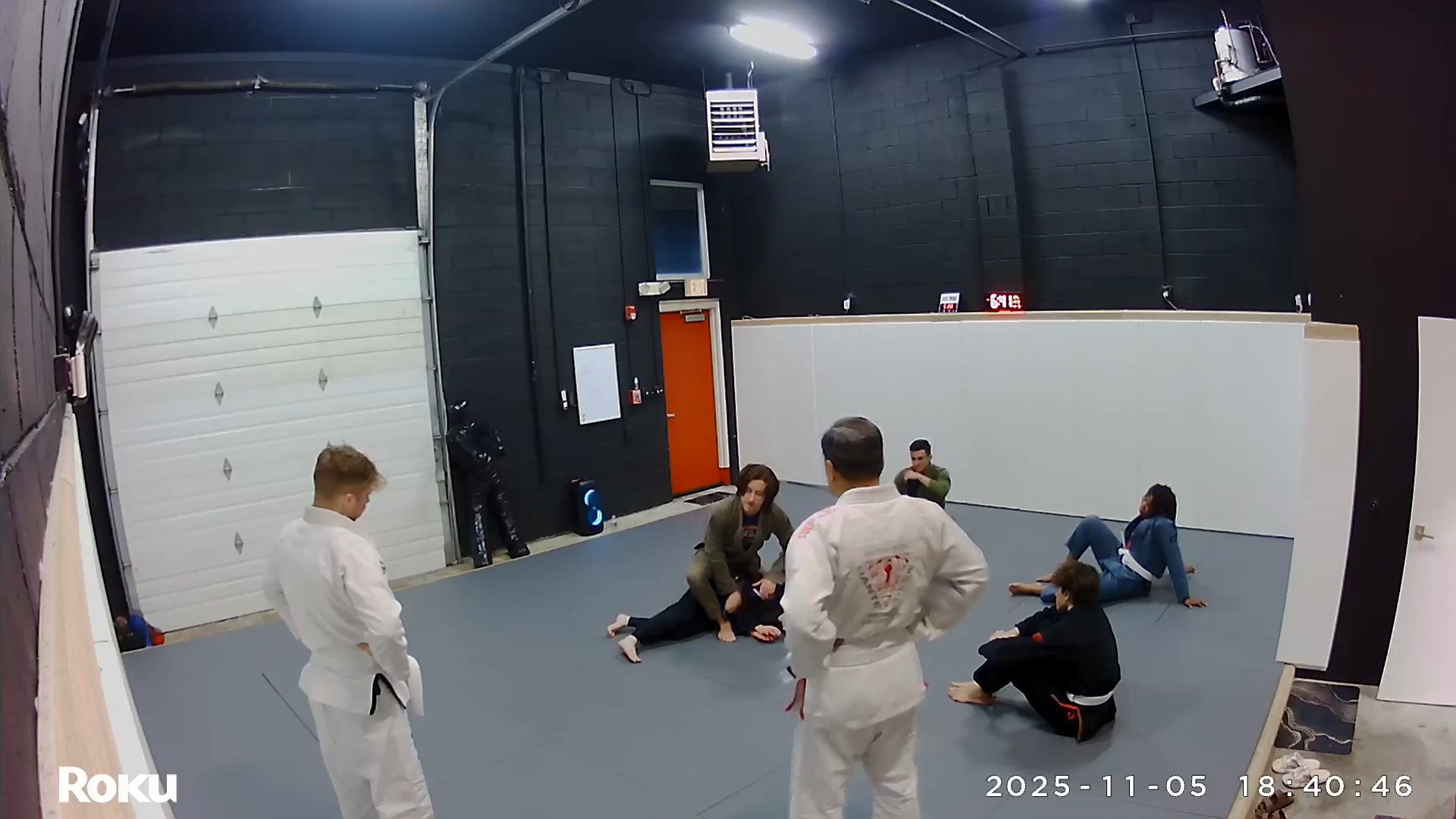
Jiu-Jitsu gives you a practical way to get stronger, think clearer under pressure, and carry yourself differently every day.
If you have ever wanted training that feels useful beyond the mat, Jiu-Jitsu tends to click fast. It is not just about learning moves. It is about learning how to stay calm while you are uncomfortable, how to solve problems with limited options, and how to keep showing up even when progress comes in small steps.
In our Manalapan gym, we built the experience around real people with real schedules: beginners, parents, professionals, and kids who need something structured after school. We keep classes organized, coached, and welcoming, because you learn faster when you feel safe enough to try.
Most importantly, you do not need a certain body type or background to start Jiu-Jitsu. You just need a willingness to learn, to move a little, and to give yourself a fair first month before you decide what you think.
Why Jiu-Jitsu builds confidence that actually sticks
Confidence is not a pep talk. It is proof. In Jiu-Jitsu, you get that proof through repeatable experiences: you learn a skill, you practice it with a partner, and you see it work under controlled resistance. That cycle is powerful because it is honest. Your progress is real, and you can feel it.
We also like how confidence develops in layers. Early on, confidence looks like simply knowing what to do with your hands, where to put your knees, or how to breathe when someone is applying pressure. Later, it becomes the ability to make decisions under stress without rushing. That kind of confidence follows you into everyday life: hard conversations, unexpected problems, and situations where you would normally tense up.
Another underrated part is learning to be a beginner again. Adults rarely get the chance to start fresh at something with a clear path forward. Jiu-Jitsu gives you that. And once you get comfortable being new, you stop avoiding challenges in other areas, too.
Fitness with purpose: why this training feels different than workouts
A lot of people in Manalapan want to get in shape, but traditional workouts can feel like a chore. Jiu-Jitsu is different because the effort has a purpose. You are not just doing reps. You are learning how to move your body in coordination with another person, and that requires strength, mobility, balance, and endurance all at once.
Because grappling is scalable, we can adjust intensity without changing the quality of the session. Some days you push harder, some days you focus on clean technique. Either way, you leave having worked your whole body. Hips, core, grip, posture, and cardio all get trained in a way that sneaks up on you.
We also pay attention to longevity. The goal is not to “win the workout.” The goal is to build a training habit you can keep for months and years. That means structured warm-ups, good coaching, and partners who respect the pace you are working at.
Everyday resilience: the real skill most people are chasing
Resilience is one of those words that gets tossed around, but on the mat it becomes specific. In Jiu-Jitsu you practice:
• Staying calm while you are pinned, pressured, or stuck
• Escaping bad positions without panicking
• Accepting mistakes quickly, then moving to the next decision
• Learning to recover between hard rounds and return to focus
• Managing your energy instead of muscling through everything
That is resilience. It is not toughness for show. It is the ability to keep thinking and keep moving when the situation is not ideal.
Over time, you start noticing changes off the mat. You handle stress better. You breathe more deliberately. You feel less rattled when something does not go your way. It is not magic, but it is consistent practice, and it adds up.
Youth Jiu-Jitsu in Manalapan, NJ: structure, confidence, and control
Kids do best when expectations are clear and the environment is steady. Our youth program for ages 6 to 13 is designed to be supervised, age-appropriate, and focused on control rather than chaos. We teach skills that help kids move confidently without encouraging aggression.
A good youth Jiu-Jitsu class looks organized from the outside. Kids are learning how to line up, how to listen, and how to take turns. On the inside, they are building body awareness, coordination, and social confidence. Many parents tell us they notice changes in posture and composure even within the first few weeks.
We also understand that kids arrive with different personalities. Some are shy and need time to warm up. Some have a lot of energy and need a channel. Our job is to coach both types in a way that keeps the room safe and productive.
What parents usually care about most (and how we approach it)
Parents are often deciding between activities that all claim to teach “discipline.” We keep it practical. In youth classes, we focus on habits that show up at home and at school:
• Listening to instruction the first time, then executing a simple task
• Using controlled movement and safe body positioning with partners
• Practicing respectful boundaries and appropriate contact
• Building confidence through small wins and consistent routines
• Learning that frustration is normal, and you can work through it
And yes, kids have fun. But it is a guided kind of fun, with a clear beginning, middle, and end to the class. That structure matters.
Adult Jiu-Jitsu in Manalapan, NJ: beginners welcome, progress is the point
Adult beginners often worry about two things: being “too out of shape” and being the only new person. We built our adult program so you can start from zero, learn the fundamentals in a clear progression, and train in a room that does not run on intimidation.
You will learn positions, escapes, controls, and submissions, but the deeper focus is understanding leverage. Jiu-Jitsu rewards technique, timing, and decision-making. That is why it works for a wide range of bodies and backgrounds, and why so many adults stick with it once they get past the first couple classes.
We also coach hobbyists and competitive athletes, but the training environment stays grounded. You can train hard without making it a hostile room. You can be ambitious without being reckless. That balance is not an accident, it is part of how we run classes.
A realistic look at your first month
It helps to know what you are walking into. Here is what we aim for in the first four weeks, especially for brand-new adults:
1. Week 1: Learn how to move safely on the mat, basic positions, and a simple escape plan
2. Week 2: Add one or two core techniques, then repeat them enough to feel the pattern
3. Week 3: Begin controlled sparring with clear rules and coaching, so you can apply skills calmly
4. Week 4: Connect positions together, start recognizing common problems, and track measurable progress
You will sweat. You will probably feel awkward at moments. That is normal. Our job is to keep you learning, keep you safe, and keep the pace realistic so you can return consistently.
Safety, culture, and coaching: what makes training sustainable
People stay with Jiu-Jitsu when the room feels supportive and the instruction feels organized. We emphasize a no-ego culture because it protects beginners and helps experienced students sharpen technique instead of relying on strength.
Safety is not just “go slow.” Safety is teaching you how to tap, how to apply technique with control, and how to choose training intensity based on your goals that day. Some students want a tough session after work. Some want skill development and stress relief. We can make both happen without turning practice into a brawl.
Our coaching style is structured and detail-oriented. That means you get clear steps, corrections you can use immediately, and a plan for what to work on next. Progress should not feel mysterious.
Self-defense vs sport training: how we connect the dots
Jiu-Jitsu has sport rules, and it also has real-world value. We keep the training rooted in fundamentals that matter in both contexts: controlling distance, managing posture, escaping bad positions, and staying composed under pressure.
For adults, that often means learning how to protect yourself and create space safely. For kids, it means learning boundaries, control, and confidence without escalating situations. We keep the focus on leverage and smart decision-making, not aggression.
If you are interested in competition, we can help you train with that goal in mind. If you are interested in self-defense and fitness, we can shape your training around that. The methods overlap more than most people expect, especially at the beginner and intermediate levels.
What to bring, how to prepare, and how to get more out of class
Your first few classes go better when you keep things simple. Show up a little early, hydrate, and plan to learn rather than “perform.” You do not need to memorize anything ahead of time, but you can set yourself up for a smoother start.
A few practical tips we share with new students:
• Treat the first classes like orientation, because you are learning a new language of movement
• Focus on breathing and posture before you focus on speed
• Ask questions after rounds, not during the middle of a technique
• Tap early and often while you learn, because safety is how you stay consistent
• Track one small improvement per week so you can see your progress clearly
This is also where our class structure helps. When the room is organized, beginners can relax enough to absorb details. That is when Jiu-Jitsu starts to feel less like confusion and more like a system.
Ready to Begin
Building confidence, fitness, and everyday resilience is not about a single hard workout or a motivational burst. It is about stepping into a process that gives you real feedback and real growth, week after week. That is exactly what we aim to deliver, whether you are an adult starting fresh or a parent looking for something steady and positive for your child.
If you are ready to try Jiu-Jitsu in Manalapan with a structured, beginner-friendly approach, we would love to help you get started at Lucky Cat Grappling Co. and make your first month feel clear, safe, and genuinely doable.
See what makes training at Lucky Cat Grappling Co. unique by joining a Jiu-Jitsu class today.